
The present and the future lie in precision agriculture: what is not measured cannot be improved, and Plantae sensors allow us to measure, interpret and optimize resources.
Measure to improve
“If you measure the impact of pests or nutrients, why not also measure water, soil, and climate? These are the factors that most influence crop health and yield.”
Water management and the control of soil and climate conditions are the foundation of productive efficiency. Plantae sensors allow these factors to be quantified, enabling data-driven decisions, not decisions based on intuition.
Technical information that the farmer needs about: climate, soils and water, linking them to the idea of “measure to improve”.
Climate
Climate directly influences water stress and crop development.
Factors to measure
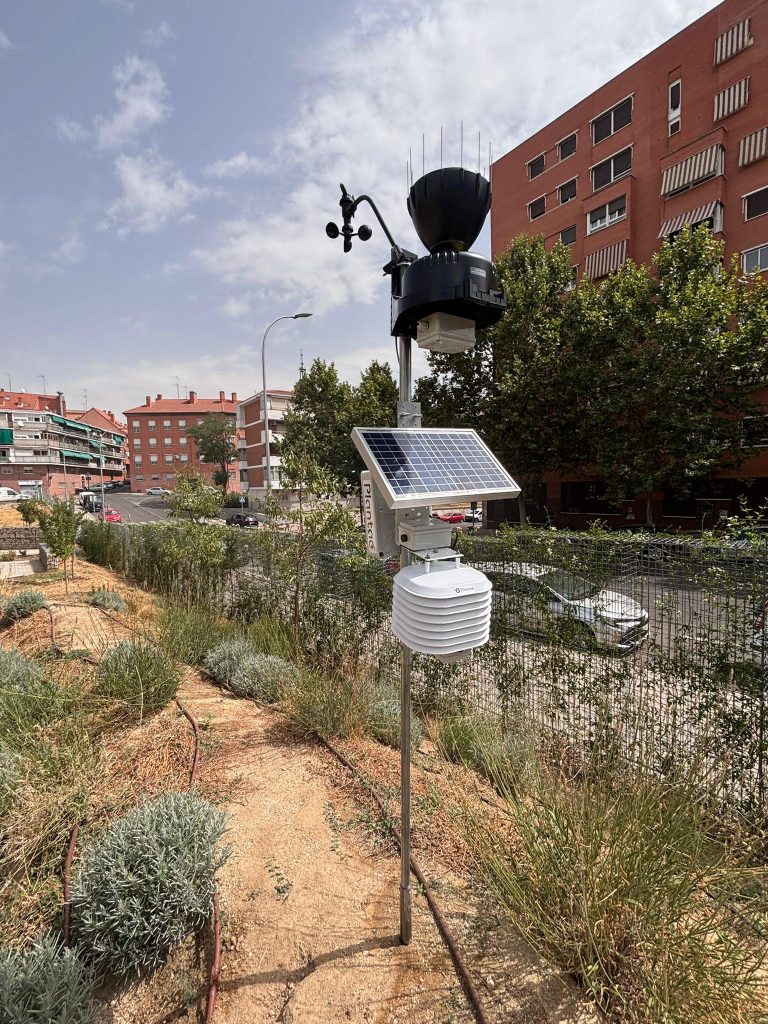
- Ambient temperature and humidity: determine evapotranspiration and the need for irrigation.
- Solar radiation: affects photosynthesis and growth.
- Wind speed: influences water loss through evaporation.
- Rainfall: allows irrigation to be adjusted according to the natural supply.
Why measure it?
- Avoid unnecessary watering when there is high humidity or rain.
- It allows you to anticipate heat waves or frosts.
- Improves the irrigation and fertilization scheduling.
Floor
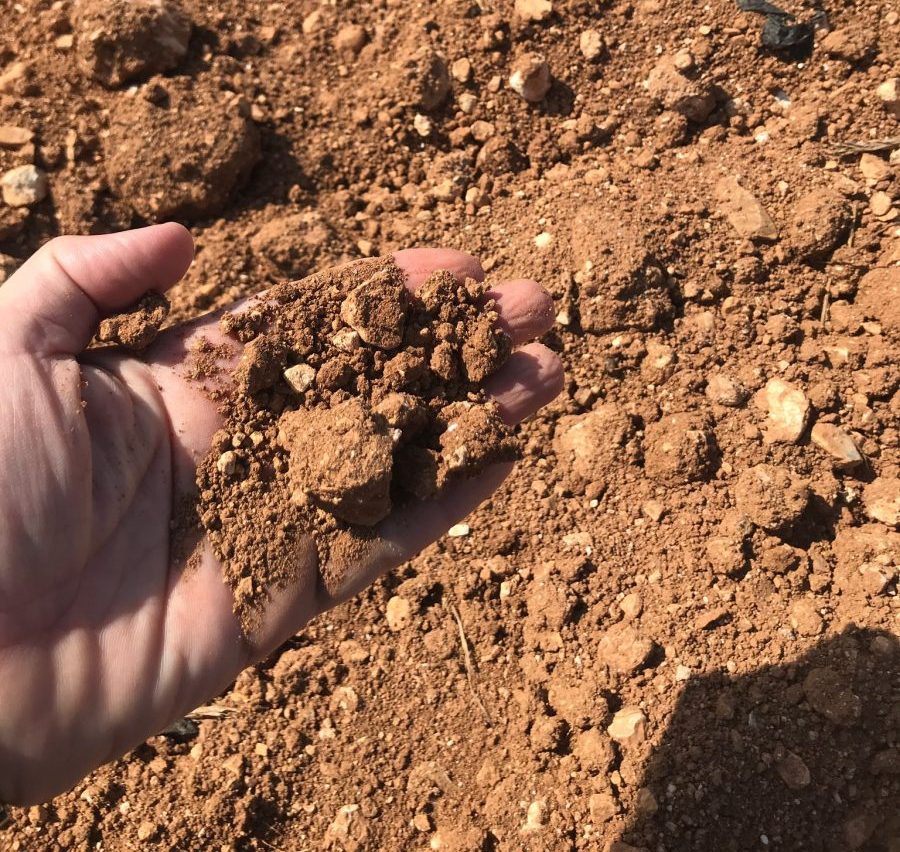
Soil is a living system, and its variability influences the absorption of water and nutrients. For example, do you know what field capacity is? Not all soils accumulate water equally; the water that drains is not absorbed by the crops.
Factors to measure
- Soil moisture: at different depths (surface or deep roots).
- Electrical conductivity: indicates salinity and nutrient concentration.
- Soil temperature: affects root metabolism and germination.
In horticultural or more sensitive crops
- En hortícolas, frutales o cultivos raros (setas, aromáticas, etc.), un exceso o déficit hídrico provoca:
- Asfixia radicular o pudrición por encharcamientos.
- Estrés y baja productividad por falta de agua.
- Measuring these parameters allows for the application of precision irrigation, avoiding sudden variations in humidity.
Water
Water is the most limited resource and the easiest to waste if not measured correctly. With Plantae sensors, we can even apply deficit irrigation, without losing quality or production.
Common problems
- Waterlogging → roots without oxygen, fungal diseases.
- Excessive irrigation → nutrient leaching, economic loss.
- Irrigation deficiency → water stress, lower yield and fruit quality.
How do the sensors solve it?
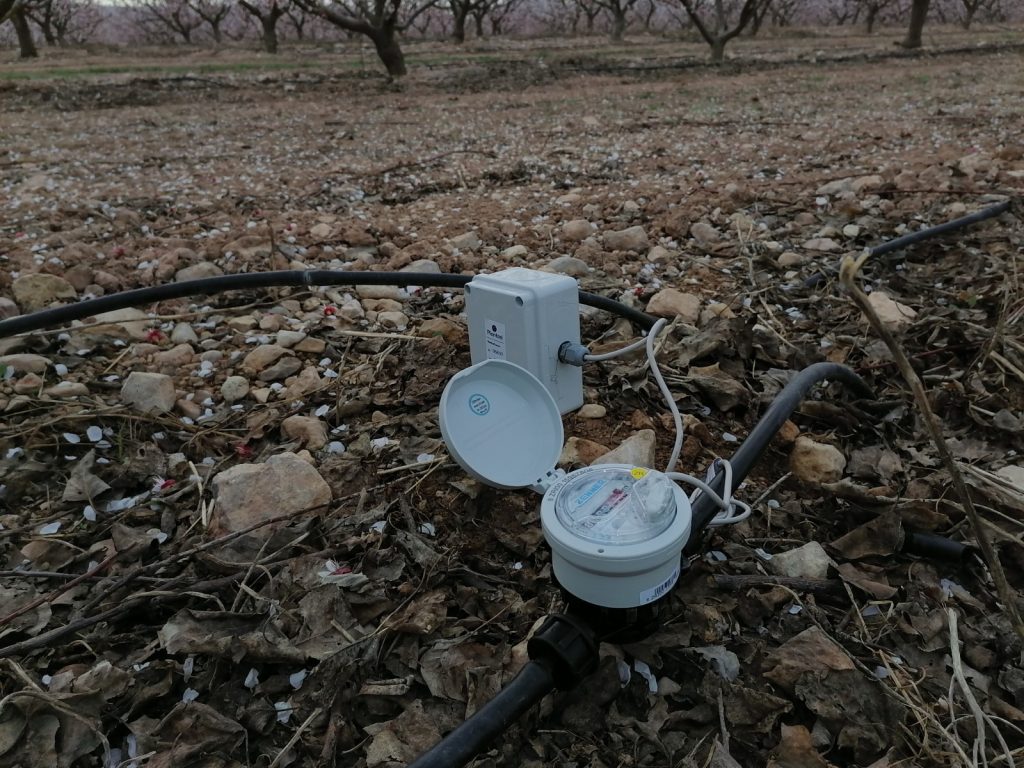
- They measure the volumetric moisture content of the soil at different depths.
- They detect water accumulation or deficit before they are visible
- They allow defining optimal irrigation thresholds by crop type and soil texture.
- Connected to the irrigation system, total automation and water savings of up to 40% can be achieved.
Nutrients
Nutrients: how to measure them, why they are critical, and how to integrate their measurement with Plantae sensors.
What to measure?
- Nitrogen (N) — forms: nitrate (NO₃⁻), ammonium (NH₄⁺) in soil; total N and plant N (% in tissue).
- Phosphorus (P) — P extractable in soil; P in tissue.
- Potassium (K) — Exchangeable K in soil; K in tissue.
- Calcium, Magnesium, Sulfur (Ca, Mg, S) — cations and assimilable S.
- Micronutrients — Fe, Mn, Zn, Cu, B, Mo (especially in horticultural and sensitive crops).
- pH and electrical conductivity (EC) — are not nutrients, but they control availability and salinity.
- Organic matter and potential N mineralization — important for medium-term N dynamics.
Measurement methods (practical and complementary)
- Análisis de suelo en laboratorio (métodos estandarizados: extracción química según región).
- Ventaja: base para fertilización, diagnóstico de reservas.
- Frecuencia típica: 1–2 veces por campaña / año para parcela; antes de cambios de manejo.
- Análisis foliar (tejido) — muestreo de hoja/pétalo/pétalo/peciolo según cultivo y fenología.
- Ventaja: refleja lo que la planta realmente está absorbiendo (diagnóstico de carencias/toxicidades).
- Frecuencia: cada 2–4 semanas en fases críticas (vegetativa, prefloración, cuajado).
- Sensors:
- Sensores de nitrato en solución del suelo / drenaje (ion selectivo, ópticos).
- Conductivity probes: indicio rápido de salinidad y —en mezclas con humedad— aproximación a movilidad de iones.
- Sensores de potasio y otros iónicos (menos extendidos pero disponibles). Ventaja: detectan dinámicas (picos de NO₃⁻, arrastres, lixiviación) en tiempo real.
- Sap/petiole analysis (in crops such as tomato, vine, citrus): measures mobile nutrients quickly.
- Proximal sensing and spectroscopy (VNIR / NDVI / specific indices): indirect for N and vigor. Good for vigor and zoning maps.
- Georeferenced sampling and mapping (grid / zonal): to generate fertility maps and apply VRA (variable rate application).
Nutrient control
Signal cross-section: soil moisture + EC + NO₃⁻ sensor → identify risk of leaching or accumulation.
Early warnings: nitrate sensors detect spikes after fertigation or after rain; Plantae can alert you to adjust irrigation/fertigation.
Automated decision-making: rules such as “if humidity > X and NO₃⁻ > Y then reduce fertigation dose” to avoid losses.
Zoning for VRA: combining soil maps (texture, OM), EC, and NDVI to define zones and fertilization recipes by zone.
Tissue validation: Use periodic foliar analysis to calibrate in-situ sensor thresholds.
General conclusion
Measuring is understanding. Understanding is improving.
Graphs help to:
- Optimize water usage.
- Anticipate risks due to climate or soil.
- Increase efficiency and sustainability.
- Improve profitability and production quality.
Below I detail how the message and technical information you need about climate, soils and water can be focused, linking them to the idea of “measure to improve”.
Sources
 English
  Spanish