
We still find ourselves without answers when we ask a farmer: What is field capacity? How much water can your soil hold? Let's try to clarify these questions.
Field capacity
La capacidad de campo (CC) es la cantidad máxima de agua o humedad, que un suelo puede retener después de que el exceso de agua drena debido a la gravedad, pero antes de que el agua esté completamente seca. Es un indicador clave para saber cuánta agua está disponible para las plantas.
The measurement of field capacity indicates whether the soil is stable in terms of water, air and soil content.
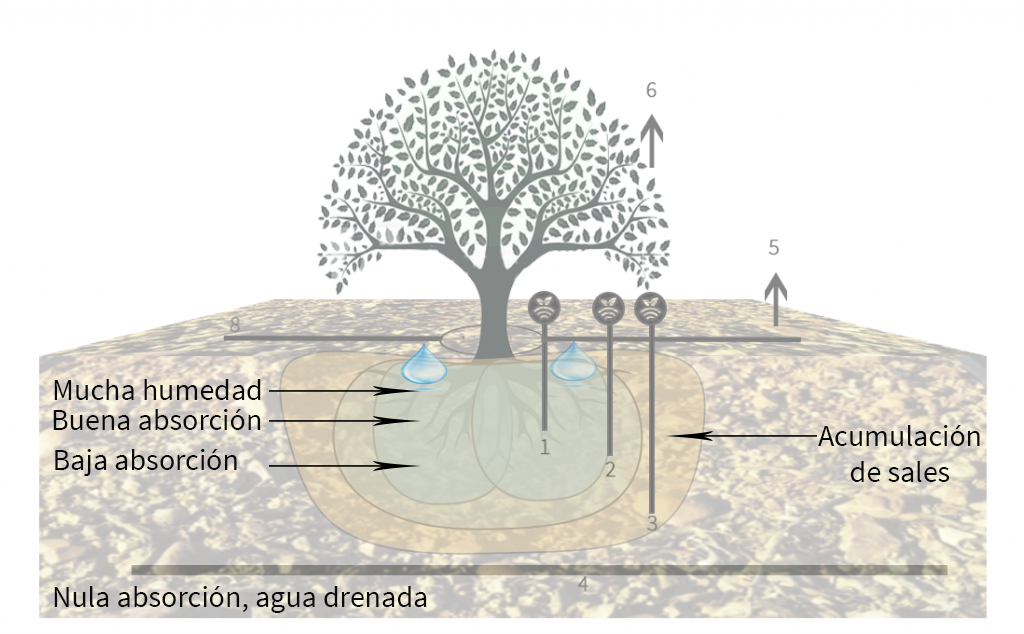
Water that drains from the soil is not available to plants, as it is lost to gravity before the roots can absorb it. This occurs when the soil is saturated (i.e. all its pores are filled with water) and excess water begins to move into deeper layers.
Permanent Wilting Point
The plant's environment no longer has available water. This is the level of soil moisture at which plants can no longer extract water and begin to wilt. The plant may suffer irreversible root damage.
Available Water (AD)
It is the water that is between the Field Capacity and the Permanent Wilting Point. It is measured in millimeters (mm) of water per meter of soil or as a percentage of the dry weight of the soil.
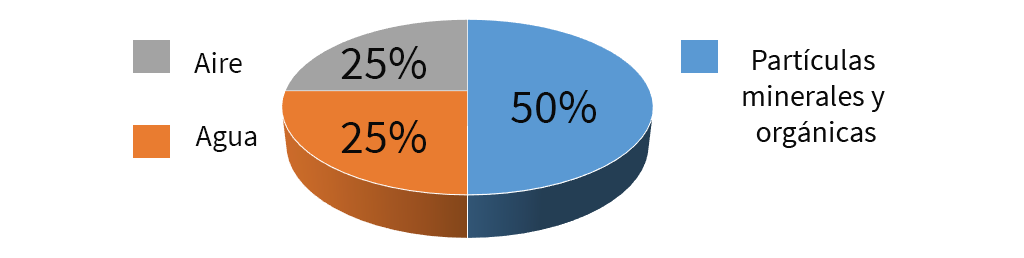
The factors that influence field capacity depend on the soil composition.
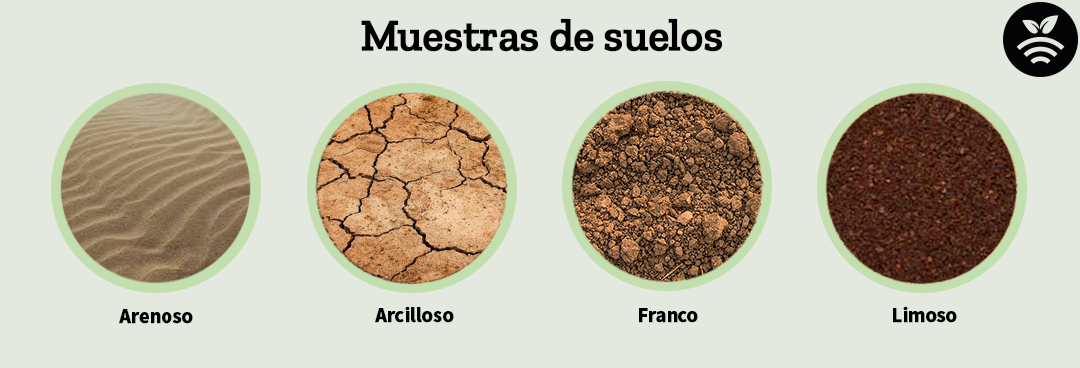
- Sandy soils: Low field capacity, as water drains quickly.
- Clay soils: High field capacity, but some of the water is retained in an unavailable form.
- Silty-loam soils: Excellent field capacity and water availability.
Typical Available Water Values
They depend on the soil texture:
- Arenosos:
- Capacidad de Campo (CC): Entre un 5% y un15%.
- Permanent Wilting Point (PMP): Entre un 2% y un 5%.
- Available Water (AD): Varía entre un 3% y un 10% (30-100 mm/m).
- Franco-arenosos:
- CC: 10-20%
- PMP: 5-10%
- AD: 5-15% (50-150 mm/m)
- Franco-limosos:
- CC: 20-30%
- PMP: 10-15%
- AD: 10-20% (100-200 mm/m)
- Arcillosos:
- CC: 30-40%
- PMP: 15-20%
- AD: 15-25% (150-250 mm/m)
How to avoid water loss through drainage
- The most important thing is to control irrigation with humidity probes. This allows us, regardless of the type of soil, to avoid excess water, applying the necessary amount for each type of soil and root system of the crop.
- Promote a deeper root system. We can use partial drip irrigation, alternating the position of the drippers. The deeper roots access water in lower layers, taking better advantage of the soil profile.
- Improve soil retention capacity: Add organic matter (compost, manure): improves soil structure and increases water retention.
- Use of plant covers: reduces evaporation and promotes gradual infiltration.
Sources
 English
  Spanish