
July 7th is World Soil Conservation Day, an opportunity to reflect on our relationship with the earth and take steps to ensure its health for future generations. The goal is to raise awareness about the importance of protecting and conserving soil, a natural resource essential to life on the planet.
The date was established in honor of Dr. Hugh Hammond Bennett, a pioneer in the study of soil conservation, who died on July 7. His work in the U.S. helped develop sustainable soil management policies.
Why is soil conservation important?
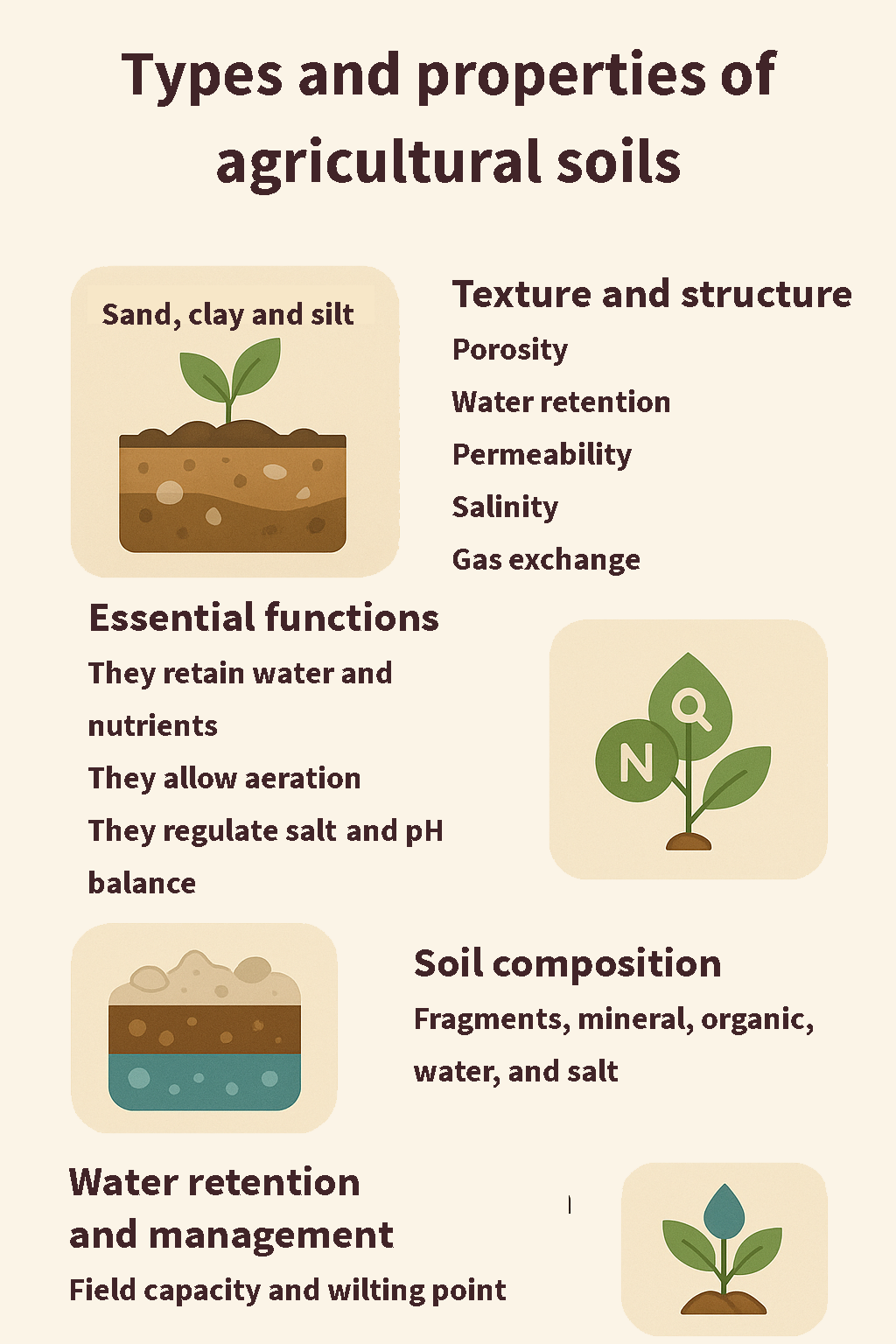
Agricultural soils are those with a loose structure, adequate organic matter and good gas exchange, which favor root growth in plants.
Soil is essential for:
- The production of food, fibers and raw materials.
- Water storage and the regulation of the hydrological cycle.
- Biodiversity, as it is home to millions of organisms.
- Carbon capture, helping to mitigate climate change.
The soil is threatened by:
- Erosion.
- Pollution.
- Deforestation.
- Excessive use of agrochemicals.
- Unplanned urban expansion.
Best practices for conservation and improvement
- Mantener altos niveles de materia orgánica, mediante:
- Aportación de compost y estiércol.
- Rotación de cultivos.
- Uso de cultivos de cobertura.
- Avoid compaction:
- Minimum tillage.
- Avoid excessive traffic with machinery.
- Monitor moisture and nutrients, using sensors that help optimize irrigation and use the right fertilizers.
Plantae probes help conserve agricultural soil
They are wireless devices that are placed on the ground to measure in real time:
- Humidity: amount of water available in the soil.
- Temperature: a key factor in microbial activity and root growth.
Multiple sensors can be installed at different depths, and they transmit data wirelessly to an app or web platform.
Why are agricultural soils important for conservation?
1. More efficient irrigation (avoids excess and shortage)
- They help to water them only when really needed, avoiding waterlogging or water stress.
- This reduces water consumption and prevents leaching (loss of nutrients to deeper layers).
2. They prevent salinization
- Poorly managed excessive watering can drag salts into the root zone.
- The probes allow maintaining a water balance that does not promote salt accumulation.
3. They promote root development
- Roots grow best when the soil has adequate temperature and moisture.
- This improves nutrient absorption and plant health.
4. They preserve microbial life
- Beneficial microorganisms (such as bacteria and fungi) require specific thermal and humidity conditions to thrive.
- The probes allow us to maintain a balanced environment for them.
5. Reduce the use of agrochemicals
- By optimizing irrigation, the need for fertilizers and pesticides is also reduced, which protects the soil from contamination.
How are they used?
- They are placed in the field or greenhouse, at different depths.
- They connect to the plataforma digital o app móvil que permite:
- Ver datos en tiempo real.
- Recibir alertas por exceso o déficit de humedad.
- Programar riegos automáticos (en sistemas con válvulas inteligentes).
Recommendations for use
- Check and maintain sensors regularly.
- Install several probes in different areas of the crop.
- Calibrate them according to the type of soil.
- Combine them with climate data (precipitation, evapotranspiration).
 English
  Spanish