
In modern agricultural monitoring, it is increasingly common to have sensors that record soil variables such as moisture and temperature. However, while soil moisture is usually relatively easy to interpret, soil temperature is a data point that is often recorded but underutilized.
Interpreting soil temperature
It's not something farmers know how to manage, partly because its agronomic significance isn't always obvious. Unlike other variables, soil temperature doesn't directly indicate stress or a need for irrigation. However—especially when measured at different depths in the soil profile—it's a key indicator of the biological and physiological functioning of the soil-plant system.
Understanding what soil temperature tells us allows us to interpret processes such as:
- Biological activity.
- Nutrient mineralization.
- Root development, especially when analyzed in conjunction with soil moisture.
The soil as a dynamic system
Soil is not a homogeneous medium. As we descend through the soil profile, the physical, biological, and thermal conditions change.
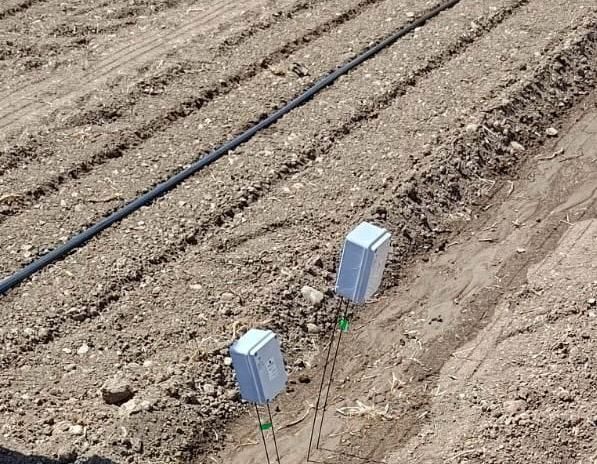
The uppermost layers of the soil are more exposed to:
- Radiation alone.
- Air temperature variations.
- And to changes in humidity.
In contrast, the deeper layers exhibit greater thermal stability, functioning as a system with greater inertia.
This difference means that the soil temperature is not uniform throughout the soil profile. Therefore, measuring the temperature at different depths allows us to observe how heat is transmitted within the soil and how the soil system responds to environmental conditions.
One of the most important aspects of soil temperature is its relationship with the biological activity of the soil system, the set of components and processes related to the soil that allow the development of plant life and affect the functioning of terrestrial ecosystems.
The soil harbors an enormous diversity of organisms—bacteria, fungi, actinomycetes, and soil fauna—responsible for essential processes such as:
- Decomposition of plant waste.
- Formation of stable organic matter.
- Nutrient transformation.
- Soil structuring.
The intensity of these processes depends mainly on two factors: temperature and humidity.
In general terms, biological activity begins to be significant from approximately 12–15 °C, increases progressively between 15 and 25 °C, and reaches its highest intensity around 20–30 °C, provided there is sufficient humidity.
Below these values, the soil's metabolic processes slow down and the transformation of organic matter and nutrients occurs more slowly.
Influence on the root system
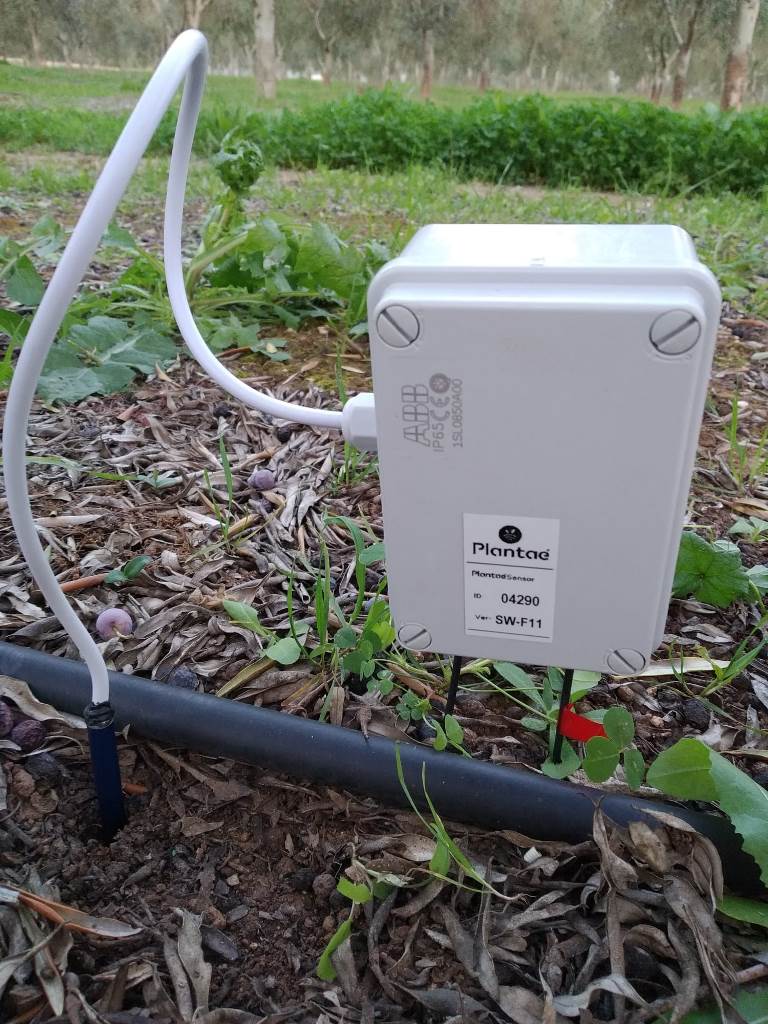
Soil temperature also directly affects root system development.
Roots require a suitable temperature range to grow and absorb nutrients efficiently. When the soil is cold, especially below 12–15 °C, root growth and nutrient absorption are significantly reduced.
In contrast, in ranges approximately between 15 and 25 °C, the root system usually exhibits its greatest functional efficiency.
This explains why crops often respond poorly to fertilization when the soil is still cold, especially at the beginning of spring.
Temperature and nitrogen mineralization
Another process that is greatly influenced by soil temperature is the mineralization of nitrogen.
Much of the nitrogen present in the soil is in organic forms that must be transformed through biological processes to be absorbed by plants. This transformation depends on microbial activity, which in turn is regulated by soil temperature and moisture.
When the soil remains cold, mineralization is slow and the release of available nitrogen is reduced. As the temperature increases—generally from 15–20 °C—biological activity intensifies and nitrogen availability can increase significantly.
In many current agricultural systems, especially in irrigated agriculture, nitrogen is applied by fertigation in the form of nitrate (NO₃⁻), ammonium (NH₄⁺) or combinations of both.
Although these forms of nitrogen are already available to the plant, the soil temperature continues to significantly influence its behavior within the soil-plant system.
Nitrogen uptake by roots depends largely on the plant's metabolic activity. When soil temperature is low, the root system reduces its activity and absorption capacity decreases.
For this reason, in cold soils it is common to observe that nitrogen applied through fertigation is not used with the same efficiency, even when it is in available forms such as nitrate or ammonium.
In contrast, when the soil is in more favorable temperature ranges —approximately between 15 and 25 °C— the root system works more intensely and nutrient absorption is usually more efficient.
Transformations of nitrogen in the soil
In addition to absorption by the plant, the applied nitrogen can also undergo transformations in the soil.
The amonio (NH₄⁺) puede transformarse en nitrato mediante el proceso de nitrificación, que es llevado a cabo por bacterias del suelo. Este proceso también depende de la temperatura y la humedad.
In general:
- At low temperatures, nitrification is slow.
- As the temperature increases, the activity of nitrifying bacteria increases and ammonium is transformed more rapidly into nitrate.
Therefore, soil temperature influences both the dynamics of nitrogen in the soil and the absorption capacity of the crop.
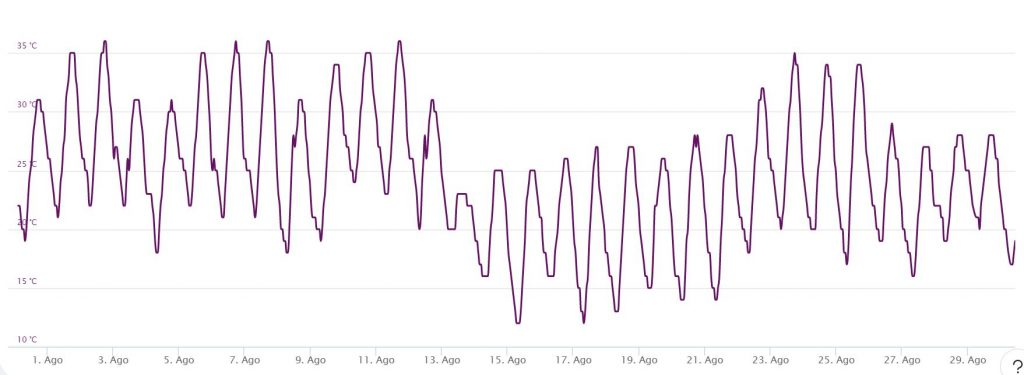
Interpreting fertilization with the help of sensors
Having soil temperature data allows for better contextualization of nitrogen fertilization management.
For example, it can help interpret situations such as:
- Limited crop response to fertigation in cold soils
- Greater nitrogen utilization when the soil reaches more favorable temperatures.
- Changes in nitrogen dynamics throughout the season.
When this data is analyzed together with the soil moisture, it is possible to understand more accurately how the root profile works and to better adjust irrigation and fertilization management.
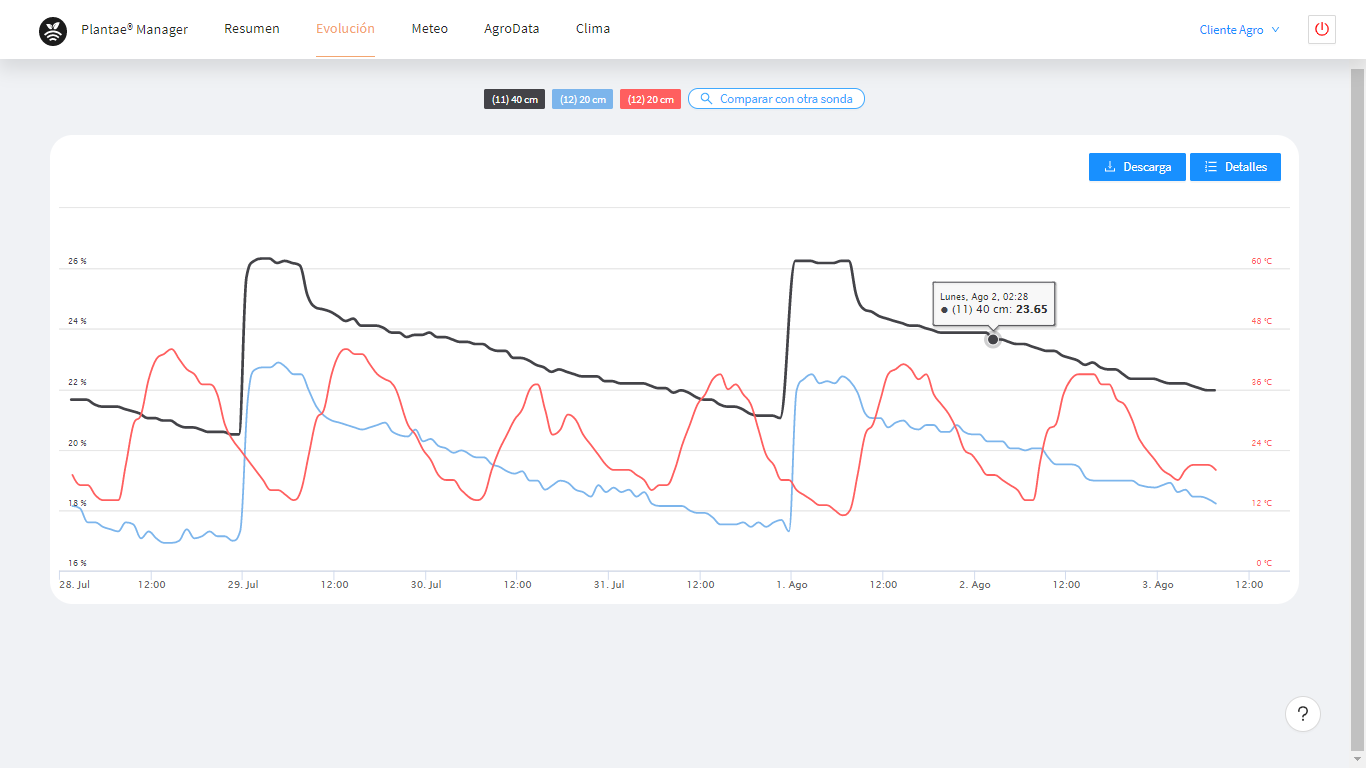
The importance of measuring temperature at different depths
Although many installations record soil temperature at a single depth, the true potential of this measurement appears when the thermal profile of the soil is analyzed, that is, the temperature at different depths.
The ability to measure temperature in different soil layers allows us to observe phenomena that are highly relevant from an agronomic point of view:
- How the ground warms up during spring.
- When and how does it get cold during autumn.
- How heat is transmitted from the surface to the interior of the profile.
- How much and how does soil moisture influence thermal dynamics?
For example, the surface layers of the soil react quickly to changes in air temperature and solar radiation. In contrast, the deeper layers exhibit a slower and more stable response.
This difference generates what is known as thermal inertia of the soil, a phenomenon that can provide very useful information about the soil structure, its water content and its biological functioning.
What does the soil thermal profile reveal to us?
When sensors are available at different depths, it is possible to better interpret how the soil profile works.
Soil with good structure and organic matter content usually shows greater thermal stability, since the moisture and porosity of the soil buffer against sudden temperature changes.
Conversely, very dry or degraded soils may exhibit more abrupt temperature variations, especially in the surface layers.
Furthermore, the combined analysis of soil temperature and moisture allows for a better understanding of the dynamics of the root system and the biological processes that occur in the soil.
Soil temperature is a simple parameter to measure but has great interpretive value in agriculture.
Rather than indicating a direct management decision, it allows us to understand how the soil's biological system works and how the soil profile evolves over time.
When the temperature is measured at different depths, its value increases significantly, as it allows for the analysis of the thermal behavior of the soil profile and a better understanding of the interaction between climate, soil, and crop.
The combined interpretation of soil temperature and moisture opens the door to a much more complete monitoring of the soil-plant system, providing valuable information to improve agronomic management and the understanding of soil functioning.
 English
  Spanish