
We are currently installing probes in Saudi Arabia, as well as meteorological stations in various crops, to optimize irrigation water without affecting production or quality.
Sustainable agriculture in Saudi Arabia
As we have already indicated in another article, the Kingdom of Saudi Arabia is betting on sustainable agriculture, both outdoors and in high-tech greenhouses. In this line, it aims to reduce water consumption in the country by 60% in the coming years.
An example of this is the agreement between Plantae and Al Rasheed Saudi Greenhouse Co, combining advice with technology.
Agricultural probes in Saudi Arabia
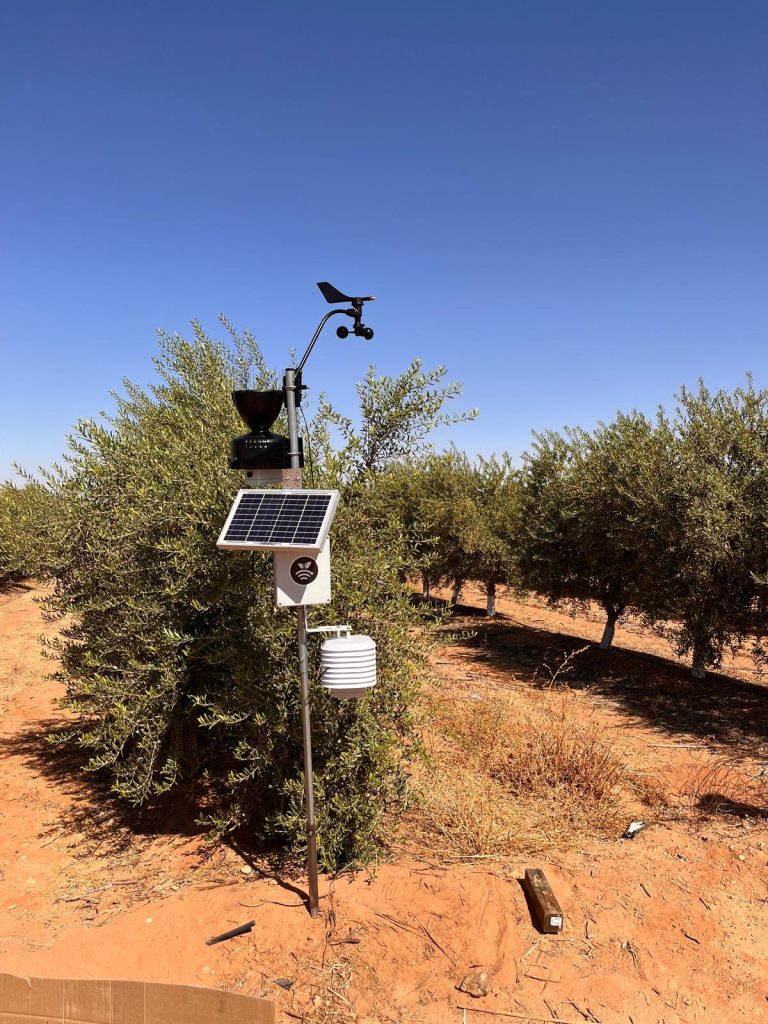
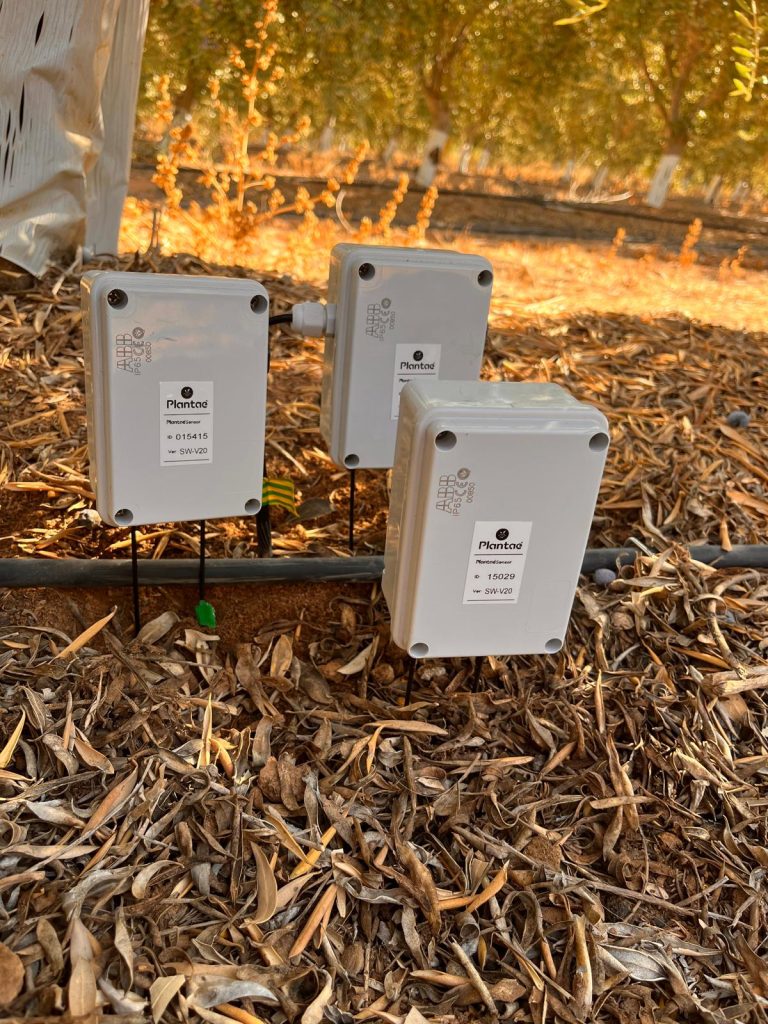
We installed probes in intensive olive tree, in the northern area of Arabia, specifically in Al Jouf, to control humidity, root temperature and conductivity, which measures salt accumulation, a very important factor for good root absorption.
Also a Meteorological station with anemometer, and hub/receiver, which sends data in real time.
The olive tree is very sensitive to water stress. As it suffers from changes in temperature, lack of humidity or excess salinity, it closes its pores as a form of protection, unbalancing the growth process of the fruit. (+INFO The stomata of the olive tree – Factors that influence their closure – Water stress).
Other techniques that Plantae has experimented with on olive trees include partial root desiccation. With this Controlled Deficit Irrigation strategy, up to 50% of the amount of irrigation water needed to replenish the actual root evapotranspiration (ETC) can be saved without noticeable reductions in harvest. The olive tree develops its root system more and makes better use of soil moisture.
The Riyadh area
In Riyadh, an area with approximately one million hectares of cultivated land and abundant high-tech nurseries, we installed probes at various points.
Plantae technology helps to optimize resources, this has been made clear by the cooperation agreement we established at the Saudi Agriculture Exhibition.
Sources:
 English
  Spanish