
Plantae's technology is geared towards precision agriculture, using sensors, weather stations, and digital platforms to optimize water use and improve crop management. While initially applied primarily to irrigated crops, many of its tools can also be adapted to rainfed crops, especially in systems with supplemental irrigation or to improve agronomic decision-making.
Meteorological Station forrain-fed crops
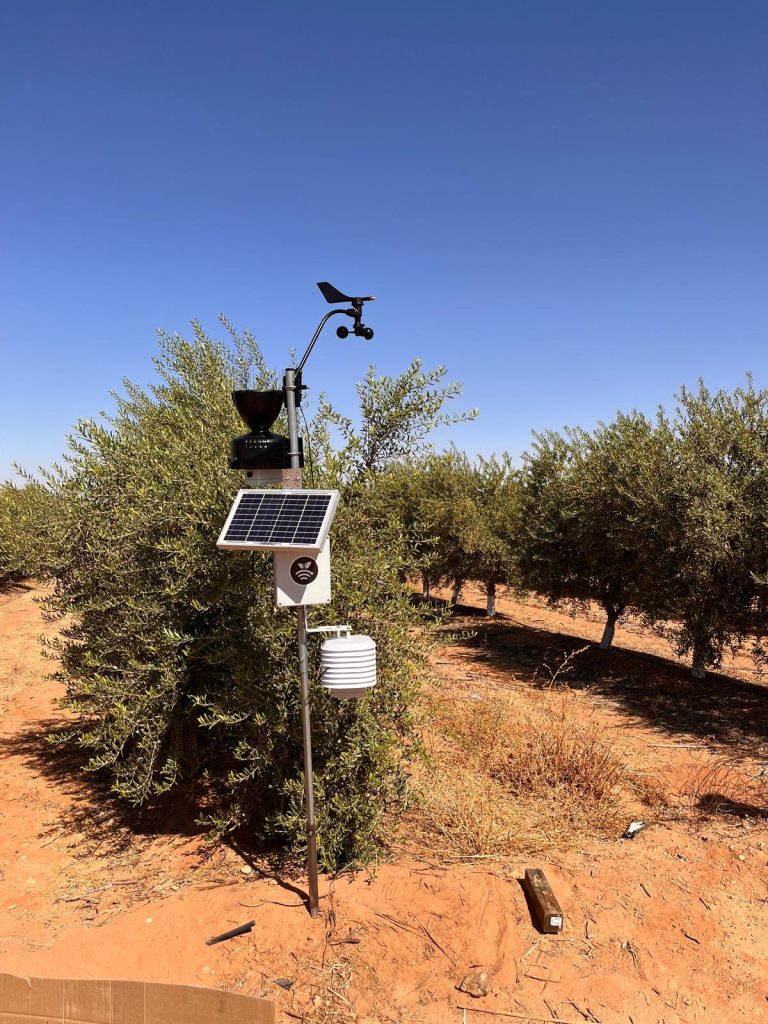
Climate monitoring for crop management planning
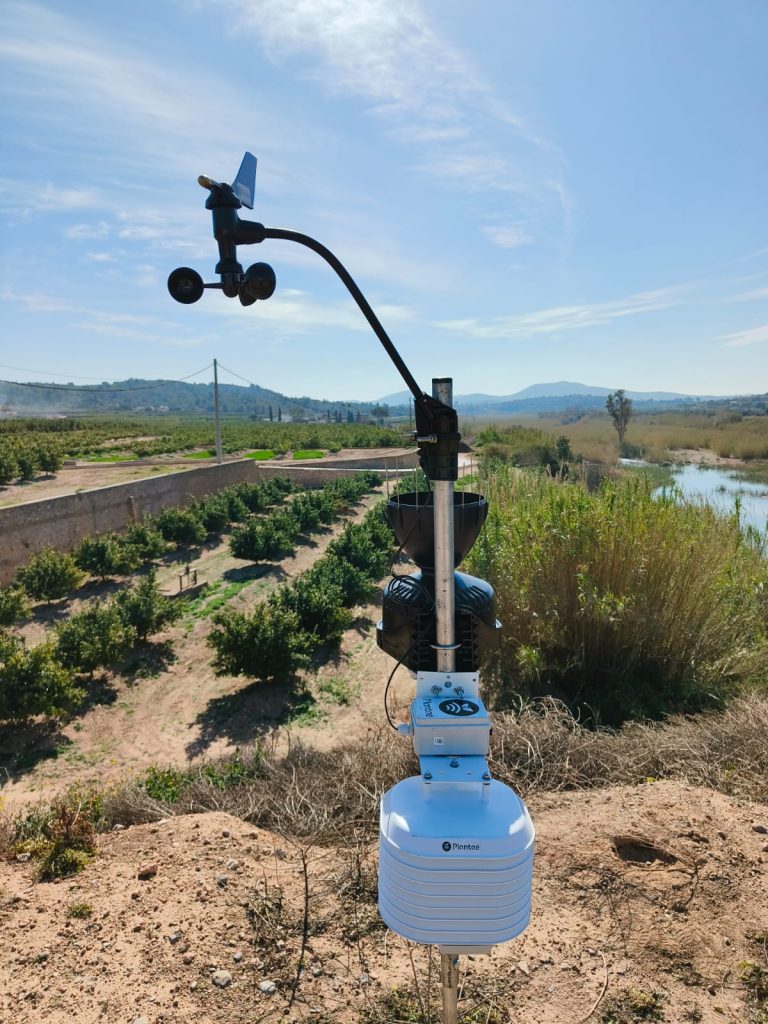
La estación meteorológica mide variables como:
- Ambient temperature.
- Relative humidity.
- Anemometer, to measure wind speed and direction.
- Solar radiation.
- Precipitation (rain gauge).
In dryland farming, this data allows us to:
- Evaluate the soil water balance.
- To know the actual amount of rain received.
- Calculate agronomic indicators such as thermal integral or chilling hours for crop development.
In crops such as cereal, olive grove or dryland vineyard, the farmer can decide sowing, fertilization or treatments based on the actual climatic conditions.
Soil moisture control
Soil moisture sensors allow you to know the available water content at different depths.
In dryland conditions, this is useful for:
- To know the soil water reserve after the rains.
- Estimate the crop water stress.
- Decide whether it is appropriate to apply supplementary irrigation at critical times.
For example, in dryland almond or pistachio orchards, the sensors indicate when the soil enters a water deficit and needs timely irrigation.
Efficient water management in supplemental irrigation
Many modern dryland crops use targeted irrigation in critical phases such as: flowering, fruit set, fruit filling.
Plantae technology with the weather station allows:
- Adjust irrigation according to the rainfall recorded by the rain gauge.
- Avoid unnecessary risks.
- Reduce water consumption.
Data-driven decision making (precision agriculture)
The digital platform collects all the data and sends it to an app or web panel where the farmer can monitor their farm in real time.
This allows:
- Historical monitoring of climate and soil.
- Extreme conditions alerts.
- Crop management optimization.
Performance improvement and risk reduction
The use of sensors and weather stations helps to:
- Anticipate episodes of water or heat stress
- Improve work planning.
- Increase the efficiency of water and input use.
✅ In summary:
Plantae technologies applied to dryland farming allow for monitoring the climate and soil to optimize agronomic decisions, improve the use of rainfall and apply supplemental irrigation efficiently, increasing productivity and reducing costs.
 English
  Spanish