
Pistachio is one of the crops that most uses Plantae technology, which is why we are going to dedicate this article to the pistachios. At Plantae we are dedicated to the design, development and marketing of wireless sensor technology to save water, improve production and crop quality.
Plantae does not sell plants or advise on the variety or type of pistachio to be planted in your area or region. However, we are going to detail information on the pistachio in Spain, its varieties and its need for irrigation control with sensors.
Ideal pistachio areas in Spain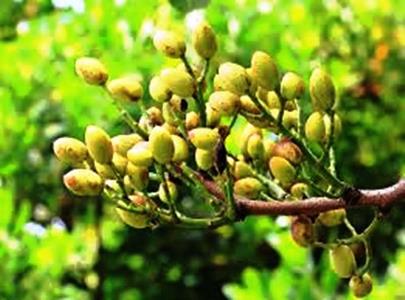
Pistachio cultivation in Spain depends on several factors, which is why not the entire peninsula is suitable.
- Un número mínimo de horas de frío, 1150 que influyen en el reposo invernal, en su posterior floración y fecundación y que la producción sea de ciclo tardío. Si el número de horas es inferior, la producción es de ciclo temprano.
- Una temperatura media en la mitad sur, favorece al pistacho, siendo más elevada en los meses de abril, mayo, junio, julio, agosto y septiembre. Esto hace que la producción y la maduración se realice de forma homogénea.
- Beware of late frosts in the months of March, April and May. If we have temperatures below -1.5 degrees, the flower spoils and production is lost. In the maps we can see which areas are more favorable for the production of pistachio in Spain.
- humidity influences the appearance of fungi and other diseases that affect the tree, therefore it is not advisable to plant in coastal areas.
The following map includes all the options and gives us the ideal areas for pistachio cultivation in Spain.
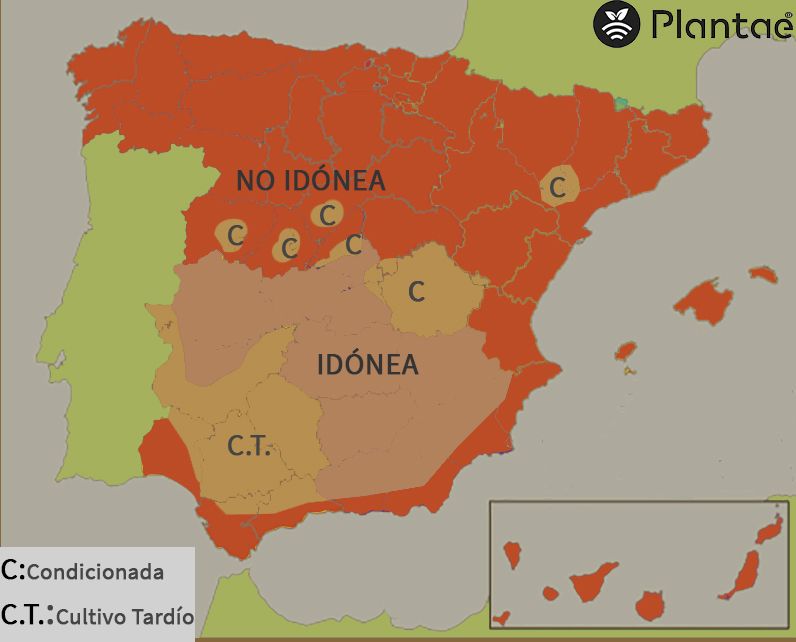
Orientative maps of the ideal areas for pistachio in Spain according to several factors:
Late frosts
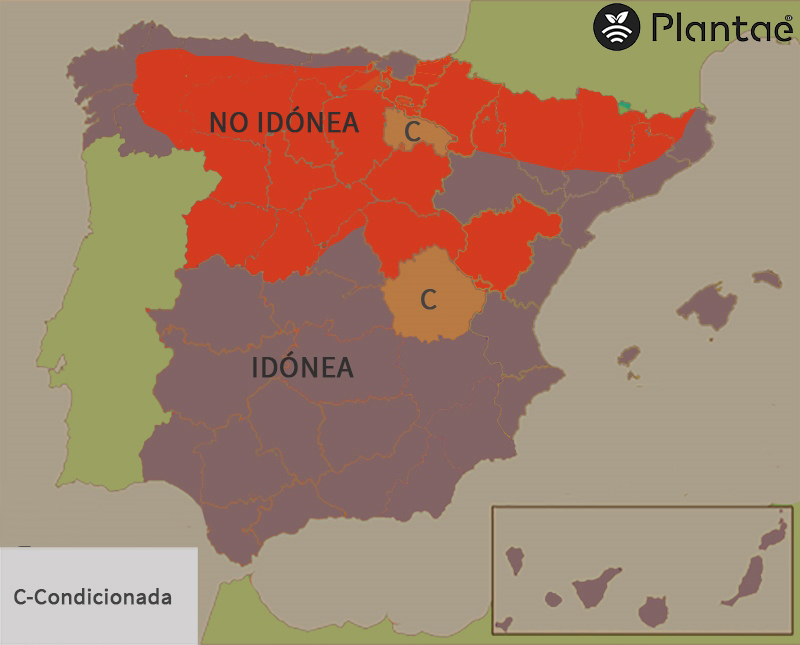
Cold days
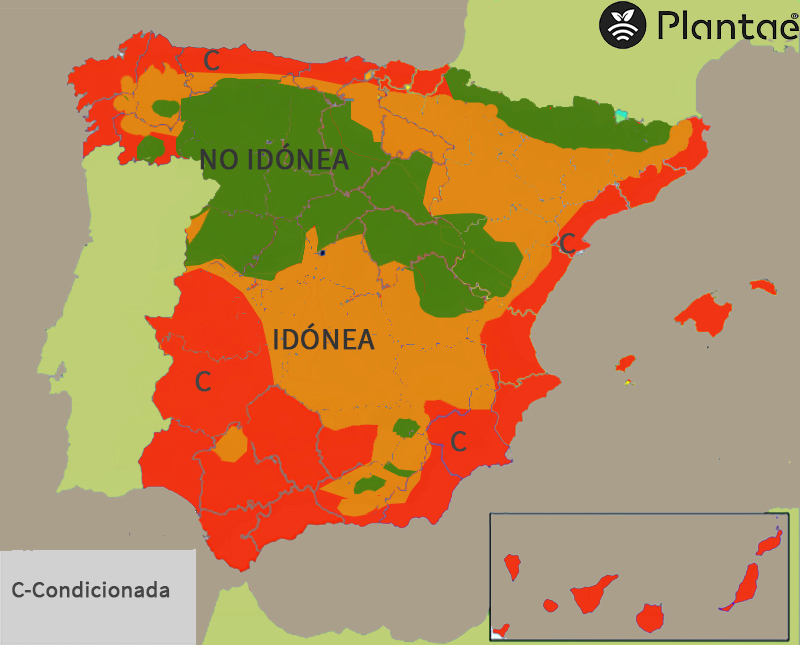
Hot days
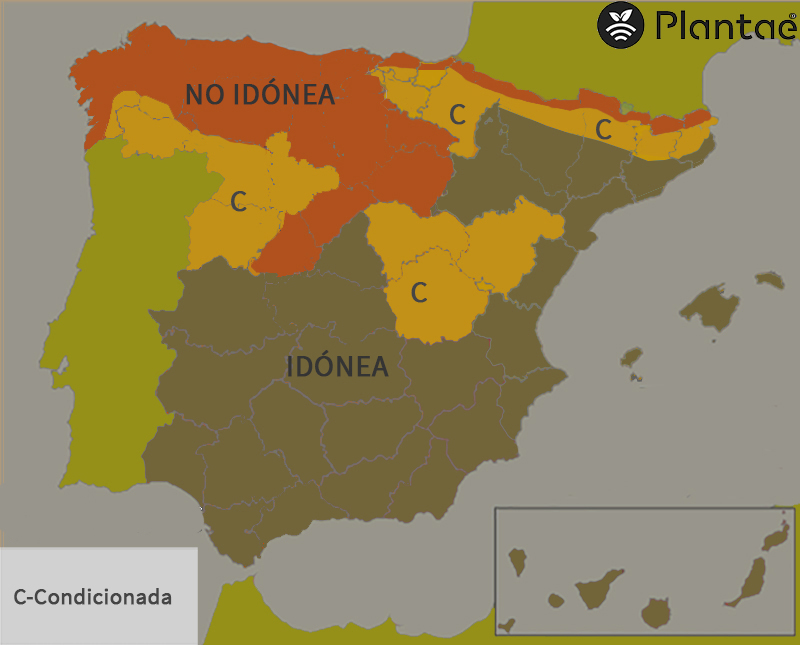
Relative humidity
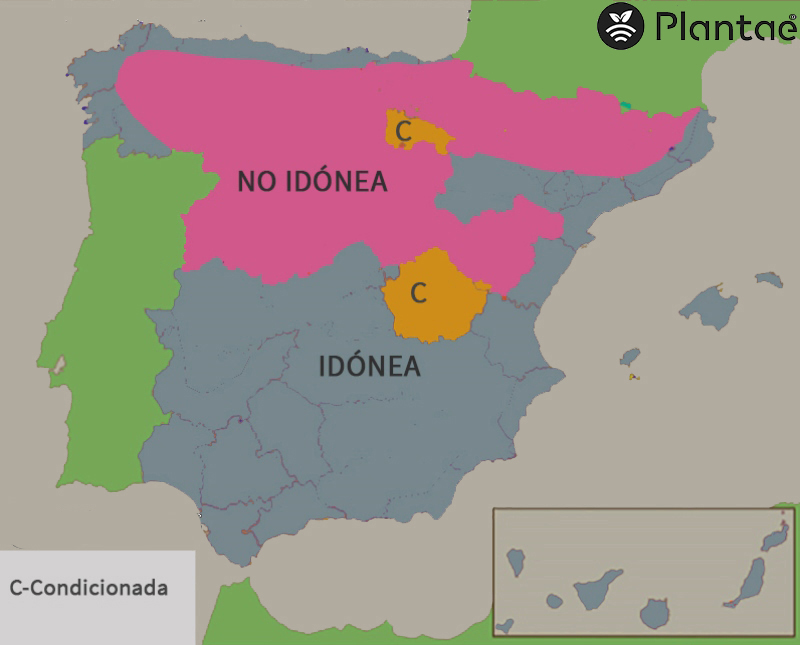
Datos procedentes del libro “el cultivo del pistacho” de José Couceiro y otros autores del Centro El Chaparrillo, con el que Plantae colaboró y probó su tecnología de sensores de humedad en 2017.
No obstante, eso no implica que en otras zonas no idóneas no haya pistachos, como es el caso de Lleida. En otras comunidades, con adaptación condicionada, también se están haciendo estudios dada la alta demanda del mercado para este producto.
También conviene tener en cuenta el soil type, como podemos ver en los gráficos siguientes.
Ideal land for pistachio in Spain
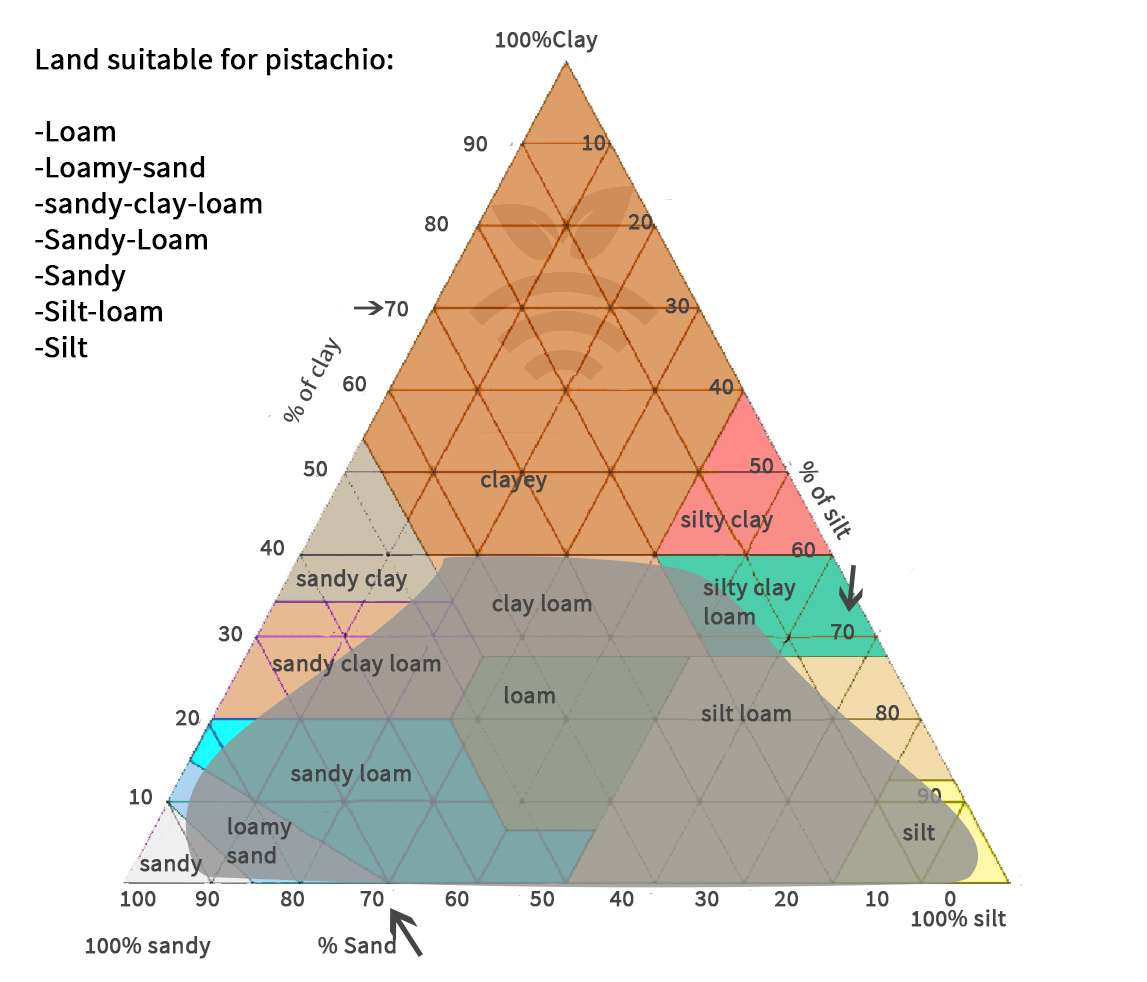
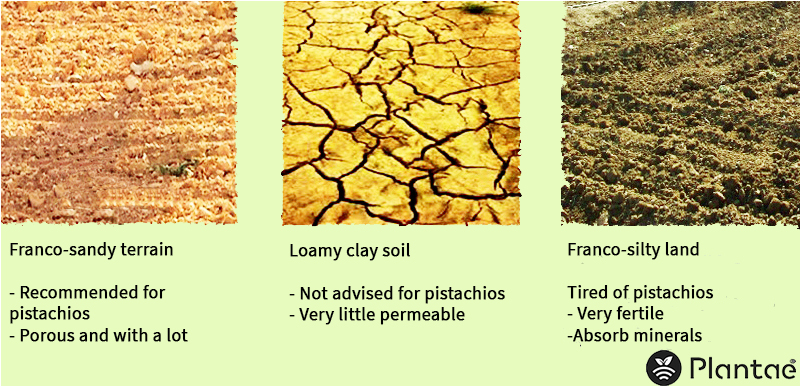
Depending on the climate and the area, we must choose where to plant. The best plantation options for pistachio in Spain are:
- Nursery grafted plant, with Kerman and Kastel varieties, very good for frosty areas. In less cold areas they are good varieties such as Larnaka , Avdat , Mateur , and Aegina .
- Graft holder + posterior graft. The most favorable rootstock varieties in Spain are cornicabra, ucb1 and atlántica.
How is the pistachio planted?
When our plants arrive, we must treat them with great care:
- They come from the nursery on pallets, we remove them and leave the pots grouped vertically on the ground. They are watered every two days with water if it is not very cold. In case of intense cold it is better not to water to avoid freezing.
- Keep them in a medium dark and ventilated place, but protected from the intense cold.
- When we are going to plant them we must check that the humidity of the soil is optimal so that it does not disintegrate from the plant. In this way the root is protected.
- The extraction must be done carefully so as not to damage the root ball.
- At the time of planting, a contribution of rooting and humus is important to stimulate the grip of the plant.
- It is important to water at the time of planting, especially if the land is irrigated.
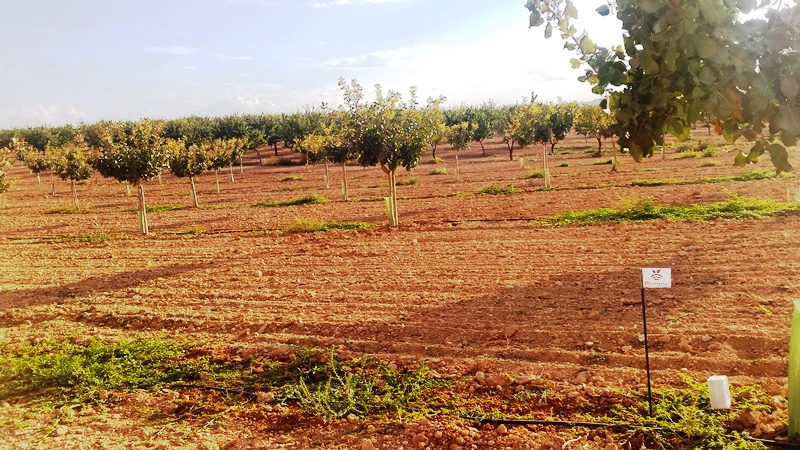
- Finally, place the protective tube and the tutor that needs at least five years to stay upright.
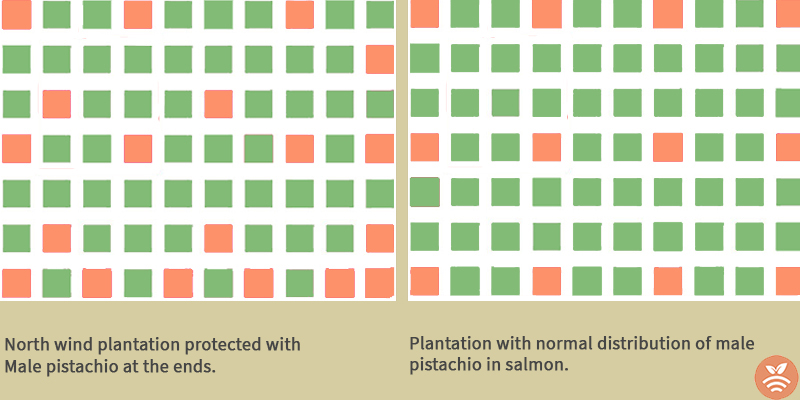
As it is an anemophilic plant, pollination with the wind, they will be planted six or seven meters apart from each other (planting frames 6 × 6 or 7 × 6), alternating females (2 or 3) and a male, taking into account whether the plantation is affected by the north wind. We will put more male pistachios in that area, also around the edges.
Pistachio care
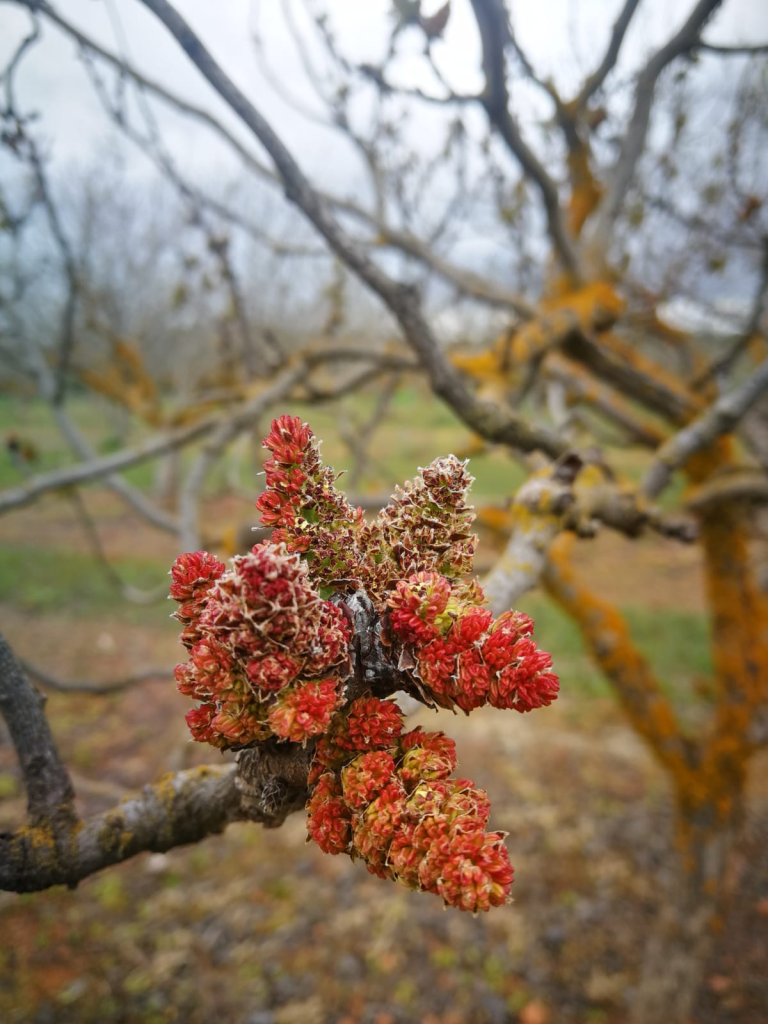
Once we have the plant growing we will not have fruit in about 5 or 6 years. During this time it only needs nutrients, irrigation and pruning >. Then we will approach the full harvest around the tenth year according to variety and type of irrigation / rainfed.
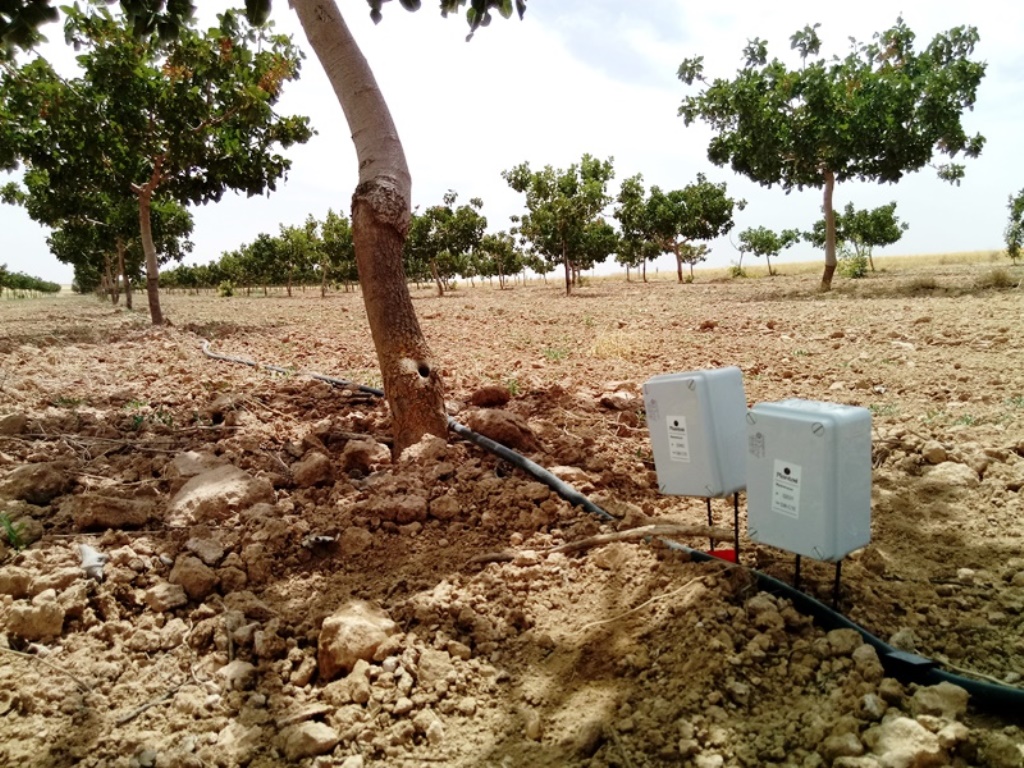
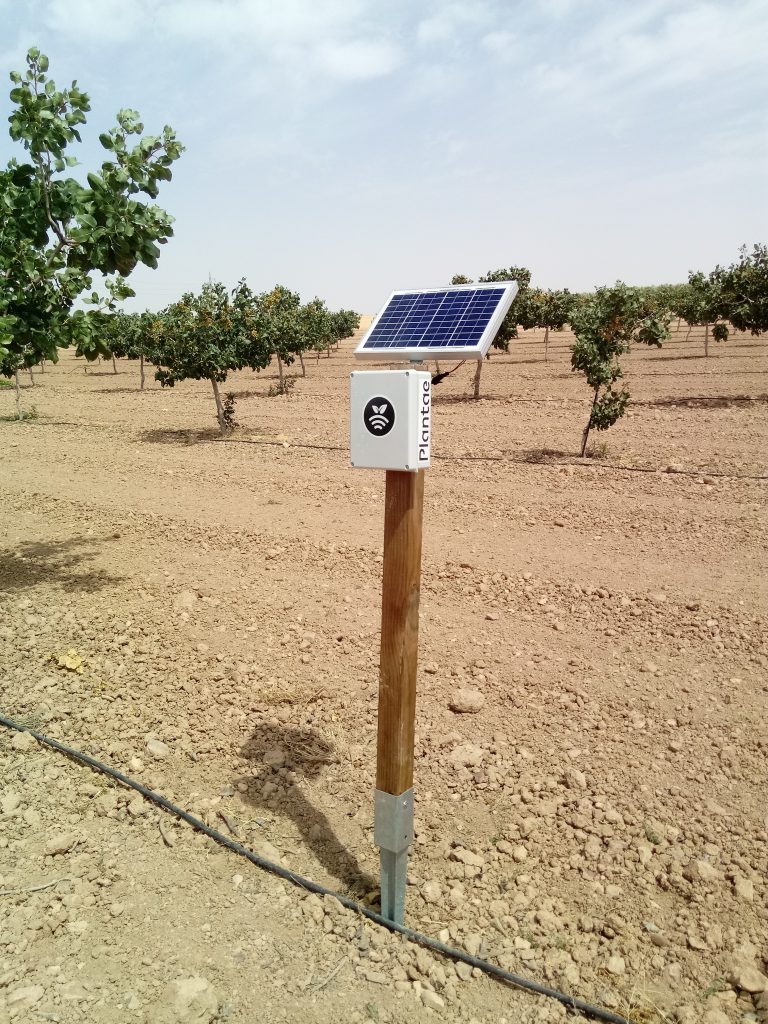
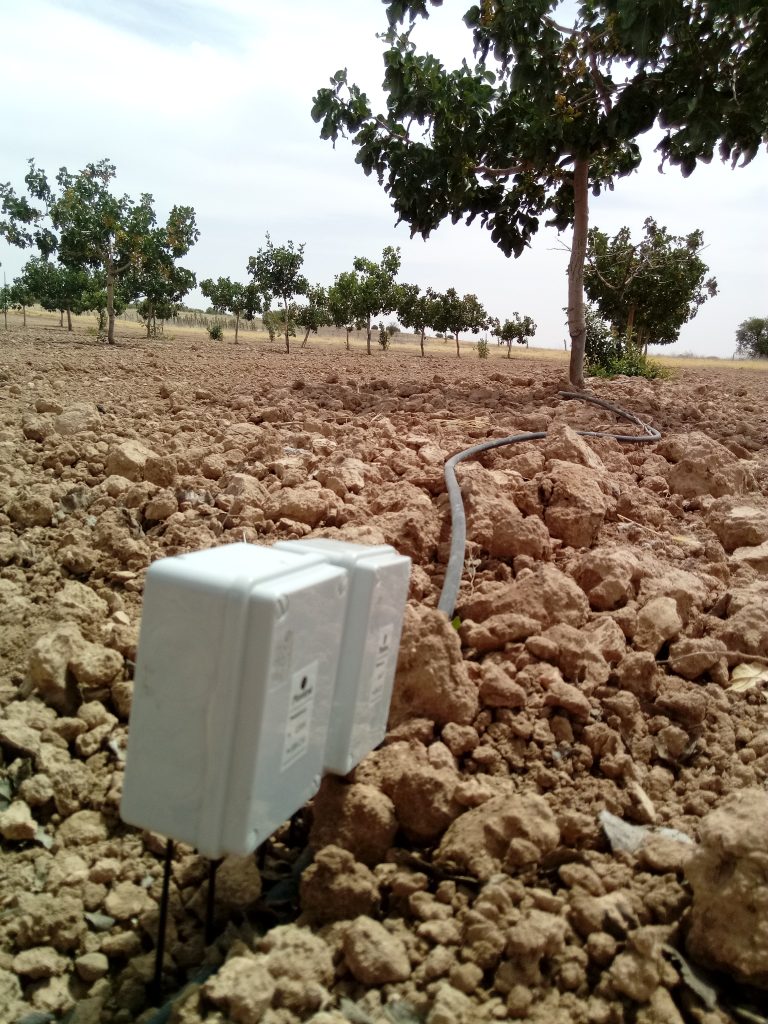
It is a plant that needs heat in summer, but it benefits from controlled irrigation , without waterlogging, that is why plantations are interested in humidity sensors to control irrigation.
As for pruning, we have several cycles of tree growth.
Training pruning:
- The pistachio in Spain is usually planted between November and January and can be already grafted or only the rootstock.
- If it is necessary to graft, it is usually done in June and before that we must prune the rootstock to prevent the branches from covering the graft.
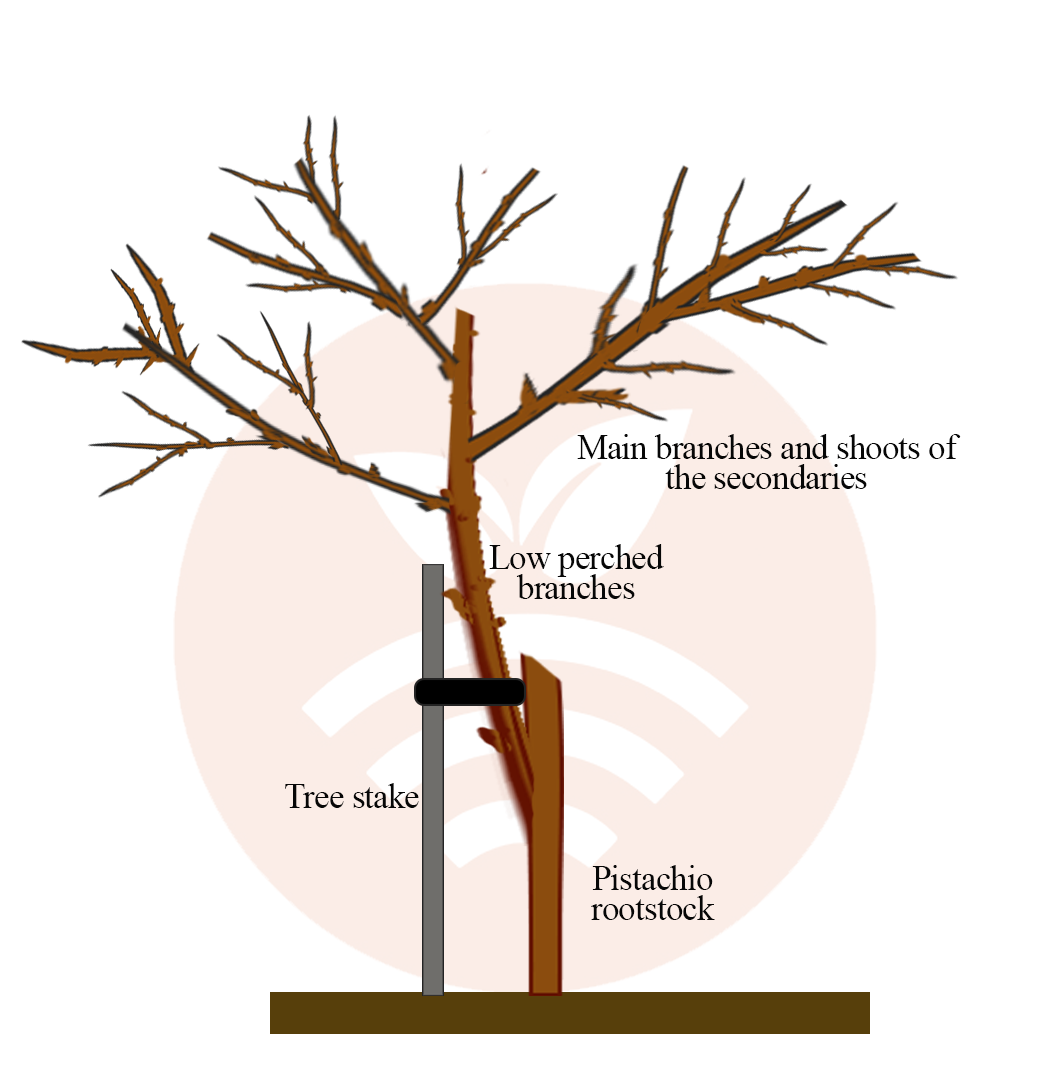
- The year after grafted planting or grafting, all the lateral branches are pruned, leaving three that we choose untouched. This pruning can be in May and June. We release the rootstock from the leaves and make sure to guide the graft with the stake.
- The following year or when we see the corresponding height, the entire lower part is pruned and at a height of 1.50 meters in females and 1.80 in males, we cut the tip and prune the side branches. It can be done in the months of May and June.
- When the three or four branches sprout at the top in the correct position, that they are not overlapping, and reach about 25 centimeters, we cut them out again, to repeat the operation of selecting the four that serve as a guide for the tree again. . The shoots of the main branch are removed.
- Training pruning continues with this technique of cutting the tips, now at a distance of about 15 centimeters. So until we shape the tree.
Production Pruning
This pruning is aimed at; aerate the tree, keep it within the marked limits and get lighting.
Rejuvenation pruning
Annual cleaning so that the terminal buds generate new branches.
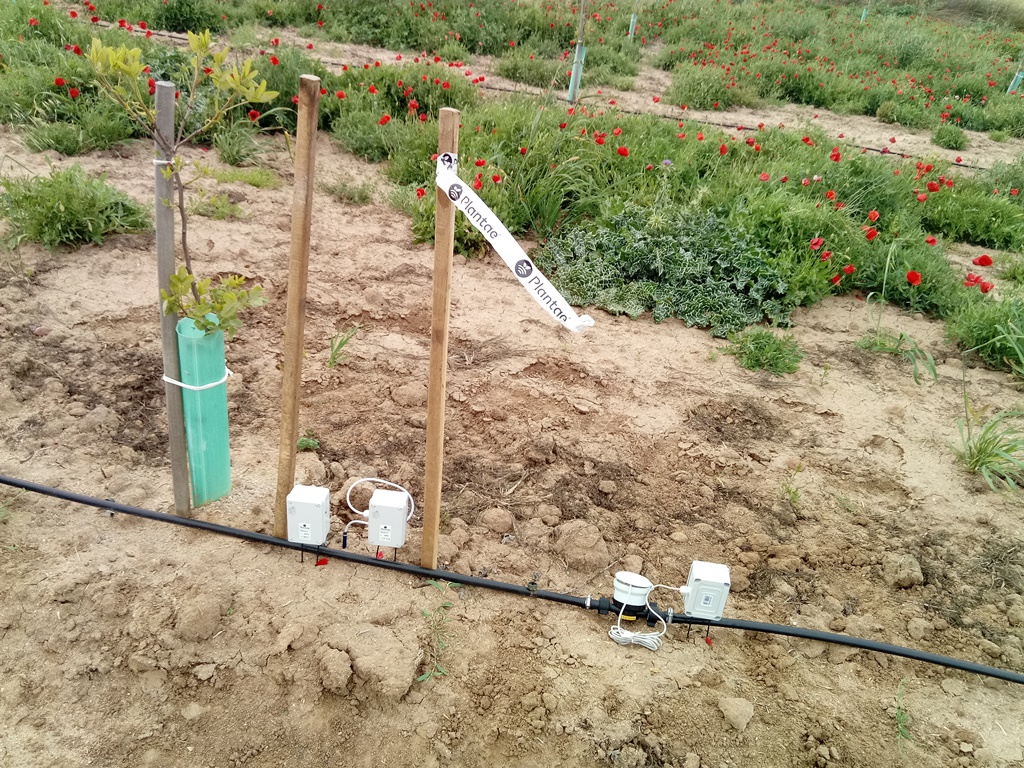
Pistachio Nutrients
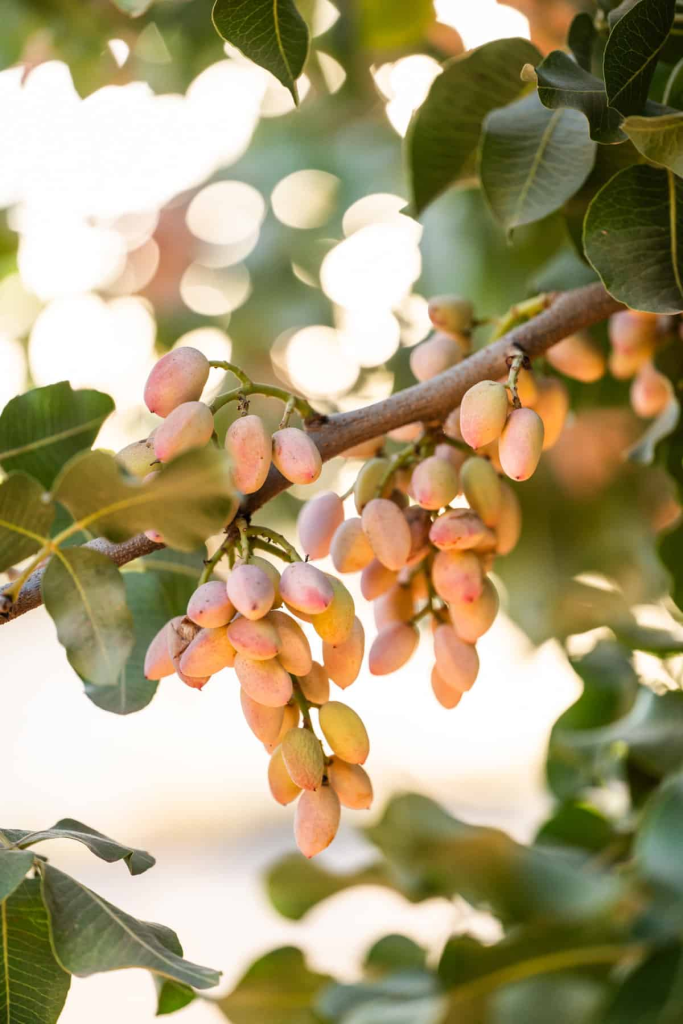
One of the best ways to fertilize the pistachio is to leave the stubble and crushed pruning remains as a cover. While providing nutrients, they serve to store moisture.
Also remove the earth around the trees a couple of times a year at least, in order to oxygenate it and bury the undergrowth.
You also need minerals like:
- Nitrogen: provides development to the tree. Its deficiency produces small trees and deformed leaves.
- Phosphorus: to promote flowering and fruit setting.
- Potassium: which influences the transport of sugars. Benefits the formation of the fruit.
- Calcium: promotes root development and improves nutrient absorption.
Post-harvest process
Once we see that the fruit is ripe, it is harvested with machines or by hand.
Se traslada a la planta de procesado y el tratado del pistacho debe hacerse antes de 24 horas, porque sino corre el riesgo de coger moho, dando manchado en la cáscara y pierde toda la calidad.
The phases of the process:
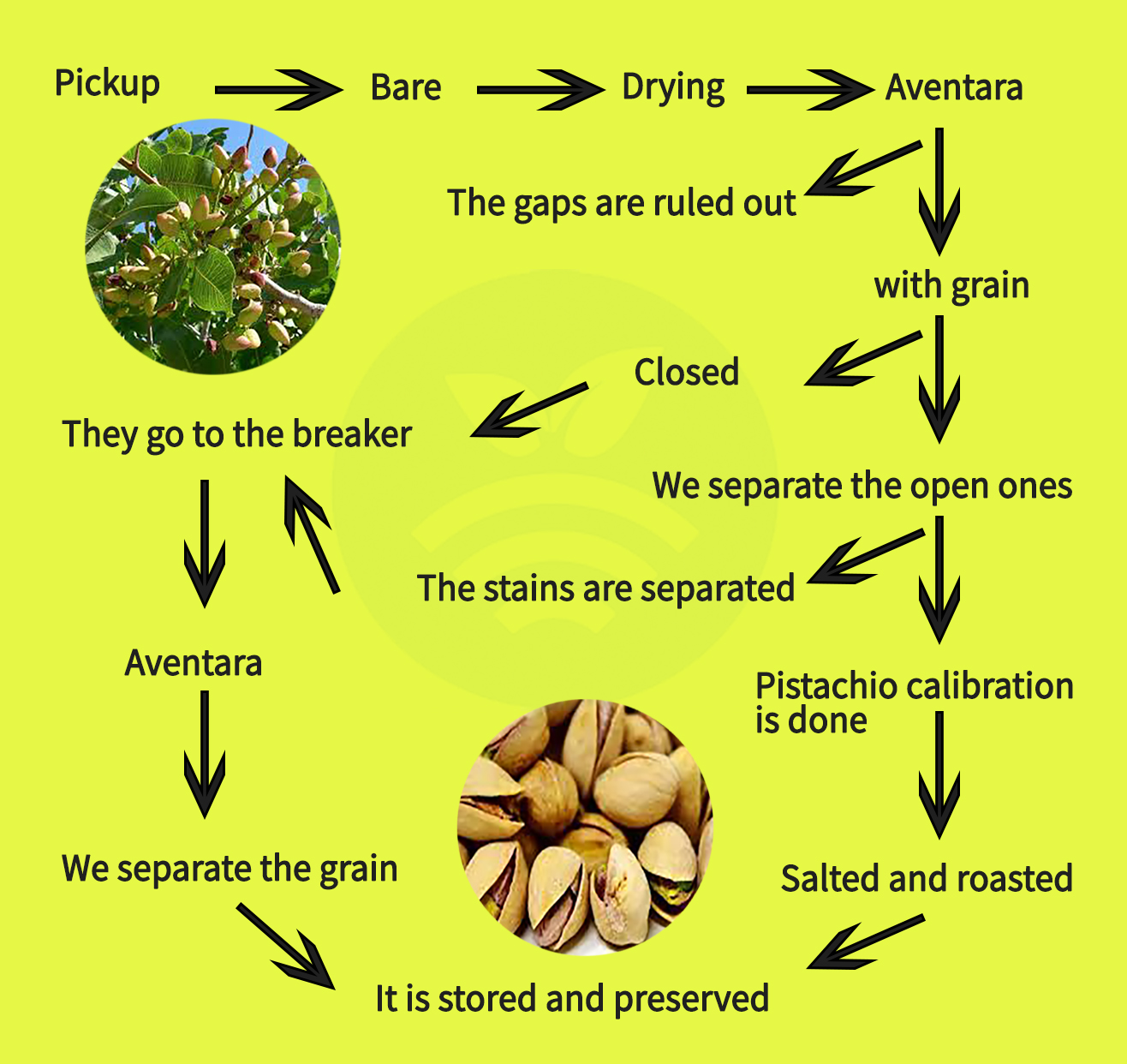
Winder: Machine with air flow that separates the voids by their weight.
Spotting : mild, moderate, severe or maximum. It is produced by fungi or by oxidation.
Calibrated : separation by different sizes. Super-extra, extra-large, large, medium and small.
The voids and shells of those that are stored peeled can be used for fertilizers.
Plantae Agro
Sources:
“El cultivo del pistacho” de José Couceiro
 English
  Spanish