
The objective this time is to optimize irrigation with probes on football fields and to do so we analyze the moisture readings of the grass.
Optimizing irrigation with probes in football fields
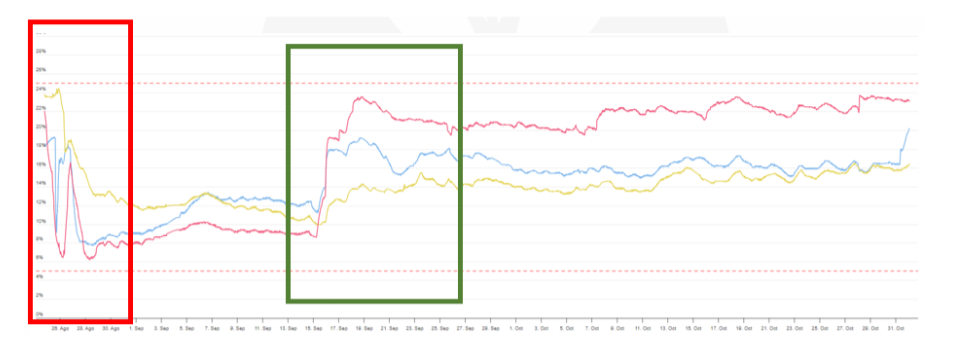
Typically, this plot used to have weekly backup irrigation, and sprinkler irrigation the rest of the time. After analyzing the sensor data, they switched to monthly backup irrigation, achieving the same goals, but with 1/4 of the backup irrigation. The savings have been very considerable.
The importance of using probes for the grass of a sports field
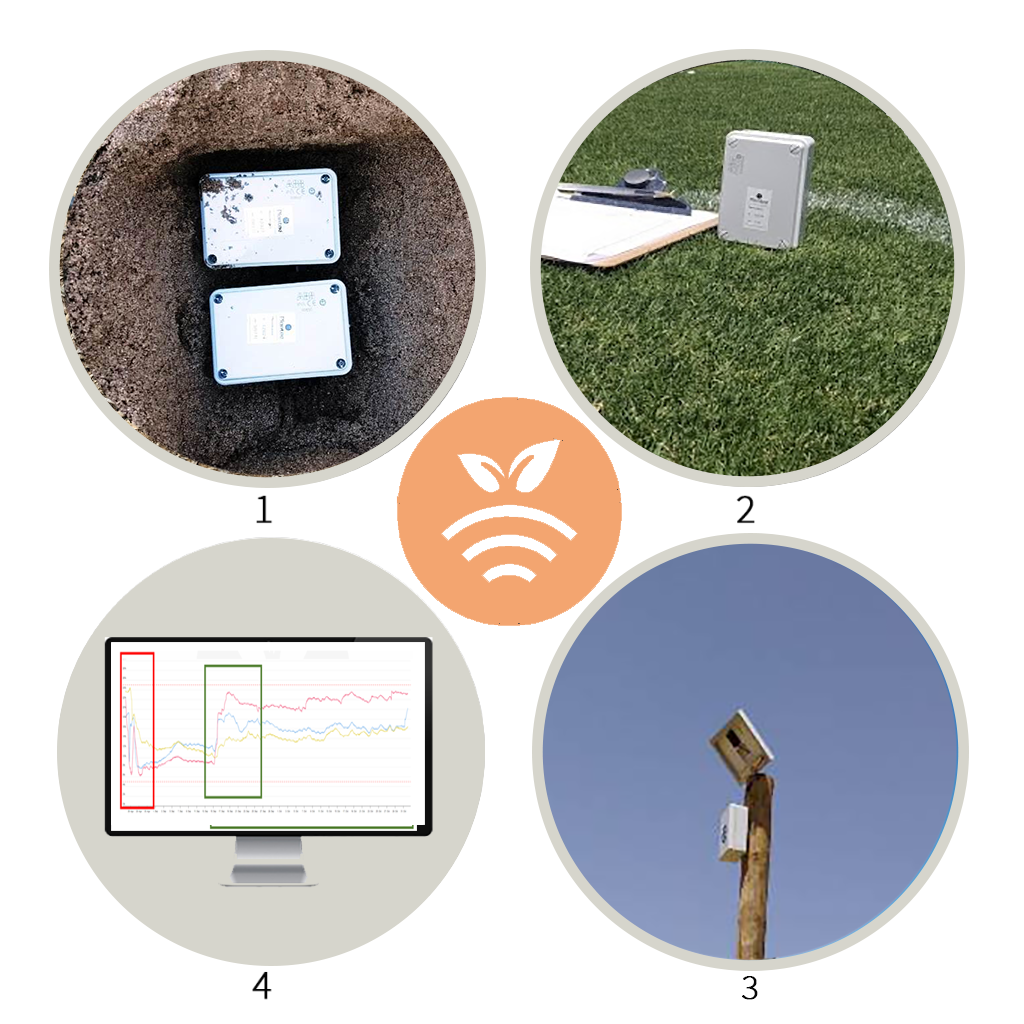
We install soil moisture sensors or probes
- These sensors are placed in different areas of the field to measure the humidity level in real time. They are wireless and can be buried or not. If they are not buried, they are removed when a competition is held.
- They allow you to know the exact amount of water in the soil and whether or not it is necessary to irrigate. Adequate irrigation prevents water stress or over-irrigation, which promotes greener and more resilient grass.
- We also measure the depth at which the soil is moist, helping to determine the correct amount of water to apply to reach the grass roots.
Weather Station
- The station collects data on weather conditions such as temperature, wind speed, relative humidity, solar radiation and precipitation.
- They help adjust irrigation based on weather forecasts. For example, if rain is expected, irrigation can be delayed or reduced.
Soil temperature probes
- They determine the temperature of the root system, preventing the appearance of fungi that alter the health of the lawn.
Sensor and irrigation system data is monitored in real time with our Plantae digital platform, allowing for on-the-fly adjustments based on field conditions.
Do not hesitate to advise you with our technical team
Sources:
 English
  Spanish