
Probe-controlled irrigation in tomato greenhouses with a readjustment we observed that it saves a significant amount of the cost of the water used.
Optimizing a tomato greenhouse in Valencia with probes
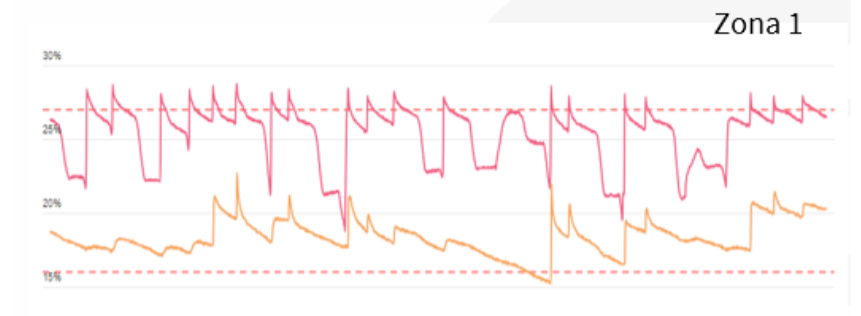
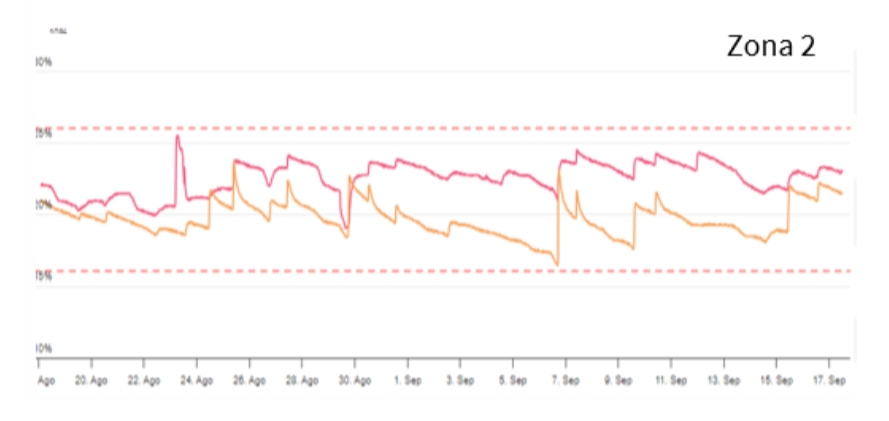
We are in Valencia and a comparison is made between 2 tomato greenhouses belonging to the same farmer, who irrigated in the same way.
After analyzing the soil and sensor data, it is discovered that the differences between the two greenhouses must force him to redesign his irrigation protocol.
Start watering:
- Zone 1 every day, (sandy soil).
- And Zone 2 reduces to 2 or 3 times per week, (clay soil).
With this adjustment, you can see that you save 25% of the cost of the water used.
Irrigation in greenhouse tomatoes with sandy soil
- Sandy soils have a low water and nutrient retention capacity. They drain quickly, which requires more frequent but lower volume irrigation.
- Tomatoes require constant soil moisture to avoid water stress in the plants, but without saturating the soil.
- On hot days it is advisable to water daily, as the sensors indicated to our client.
- It is not advisable to overwater, because this would eliminate the nutrients.
Irrigation in a greenhouse for tomatoes with clay soil
- Clay soil, unlike sandy soil, tends to retain water, and the sensors indicated that watering every two or three days was sufficient.
- Drainage is slow and it is easier for puddles to form, which would affect root oxygenation and absorption.
- Another important piece of information provided by the sensors is the depth of moisture, because in clay soils it tends to decrease with respect to the surface, which would mean that the root system would not have adequate moisture.
- Clay soils can accumulate salts more easily, so it is advisable to measure conductivity and, if necessary, apply controlled flushing irrigation.
- The greenhouse needs good ventilation, it helps prevent fungal disease problems and ensures a better water balance for the plants.
Do not hesitate to consult our technical team
Sources:
 English
  Spanish