
Probe-controlled irrigation in stone fruit (such as peaches, plums, apricots, cherries, etc.) is a precision agriculture technique that allows for optimizing water use and improving crop productivity.
Stone fruit probes in Murcia
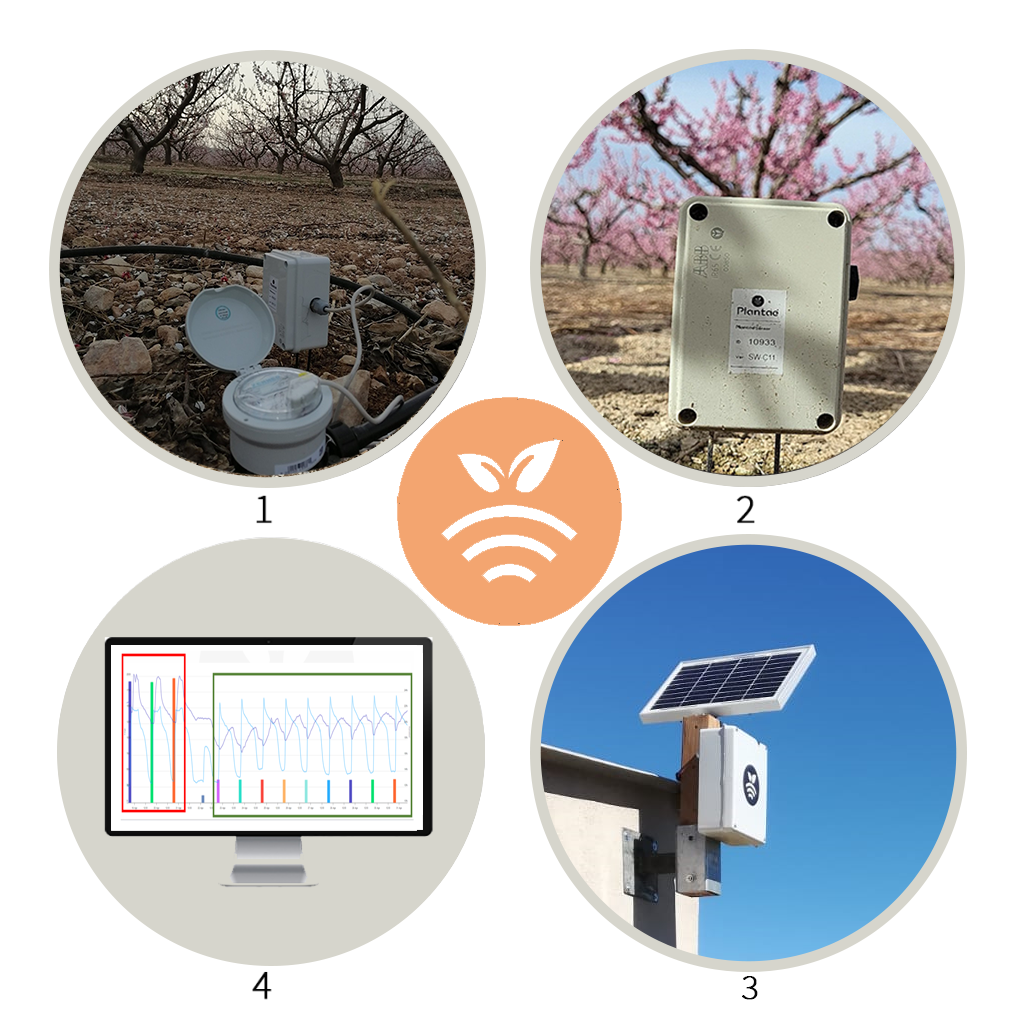
We are in Murcia on a stone fruit farm, where they irrigate using probes.
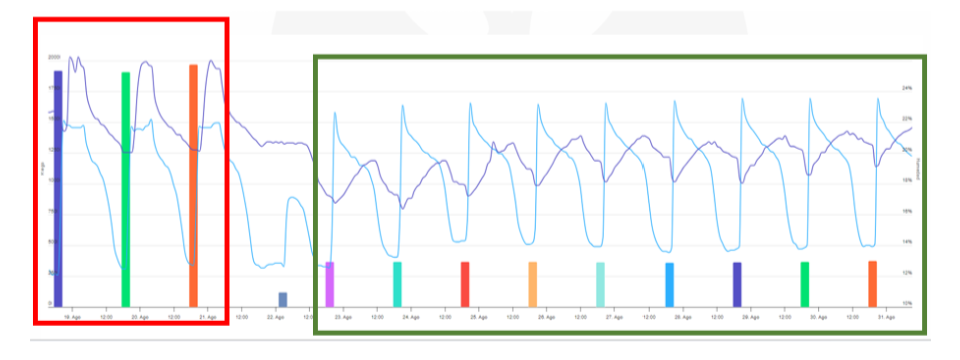
We compare the first 3 days of irrigation management without the sensors with the graphs obtained by the client and the new irrigation protocol that the farmer decides after analyzing the graphs is very gratifying.
This change has resulted in 80% savings in water and fertilizers, going from 1971 liters to 369 liters of irrigation at events.
Most importantly, this farmer achieved the same yield as other years with this huge saving of resources.
Benefits of probes in stone fruit
Las necesidades hídricas de los cultivos de stone fruit varían según varios factores, como el tipo de suelo, el clima, la edad de los árboles, y la etapa fenológica de la planta.
In a climate like Murcia's, with hot and dry summers, irrigation control is essential to save water and energy.
The period of greatest water demand is when the tree needs sufficient water for fruit growth, avoiding water stress that could affect size and quality.
During ripening, irrigation management becomes more delicate. Controlled deficit irrigation can be applied, since excess water can dilute the sugars and affect the flavour. At this stage, the aim is to maintain water balance to avoid problems such as fruit cracking. Probes for stone fruit help us to avoid water stress, which increases at this time due to evapotranspiration.
For more information, consult our Plantae agro team
Sources:
 English
  Spanish