
Conservation agriculture, also known as regenerative or conservation agriculture, is an agricultural management approach that seeks to minimize soil disturbance, promote ecosystem health, and improve long-term sustainability.
Principles of conservation agriculture
It is based on four fundamental principles: no-till, soil cover, crop diversification and control with subsoil probes.
One of the main aspects of conservation agriculture is to avoid or minimize soil tillage.
This is achieved with:
- Minimal soil disturbance: Avoid deep tillage or excessive soil disturbance. This helps preserve soil structure and reduces erosion.
- Cover: The use of cover crops, such as clover, rye or other crops, is encouraged to maintain a constant cover on the soil even when the main crop is not grown. This helps protect the soil from erosion and improves organic matter. Very useful for fruit trees with good rooting, olive trees, almond trees, pistachios...
- Crop residues: They are left in the field instead of being disposed of. These residues provide organic matter to the soil and protect it from erosion.
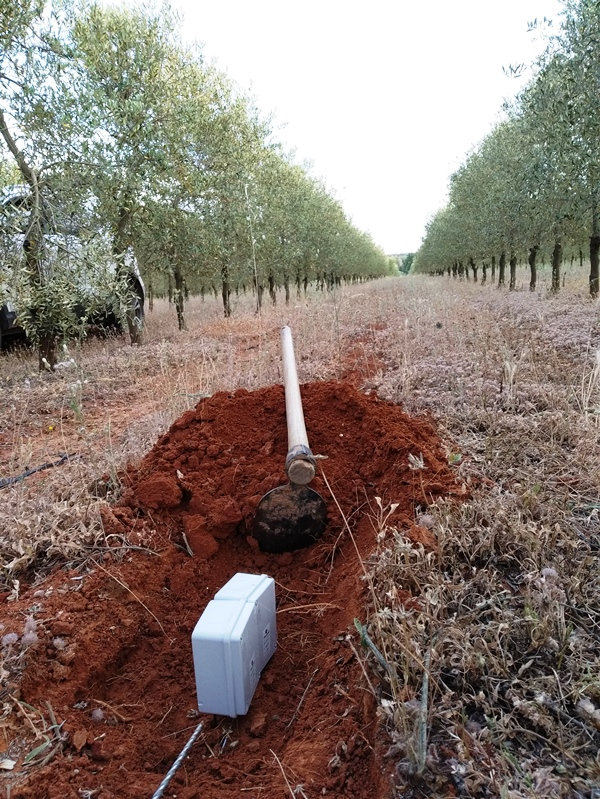
In the image, intensive olive trees with weeds and buried humidity and conductivity sensors, so that they do not disturb the machines that control the olive grove, both for pruning and harvesting the olives.
Other conservation agriculture recommendations
- Crop rotation: Reduces the accumulation of pests and diseases, improve soil fertility and increase crop diversity.
- Direct sowing: The seeds are placed in the soil without prior plowing. Special equipment is used to open small slots in the soil and deposit the seeds.
- Chemical use is reduced: No-till farming often reduces the need for pesticides and fertilizers, as organic matter and crop residues help improve soil health and water retention. nutrients.
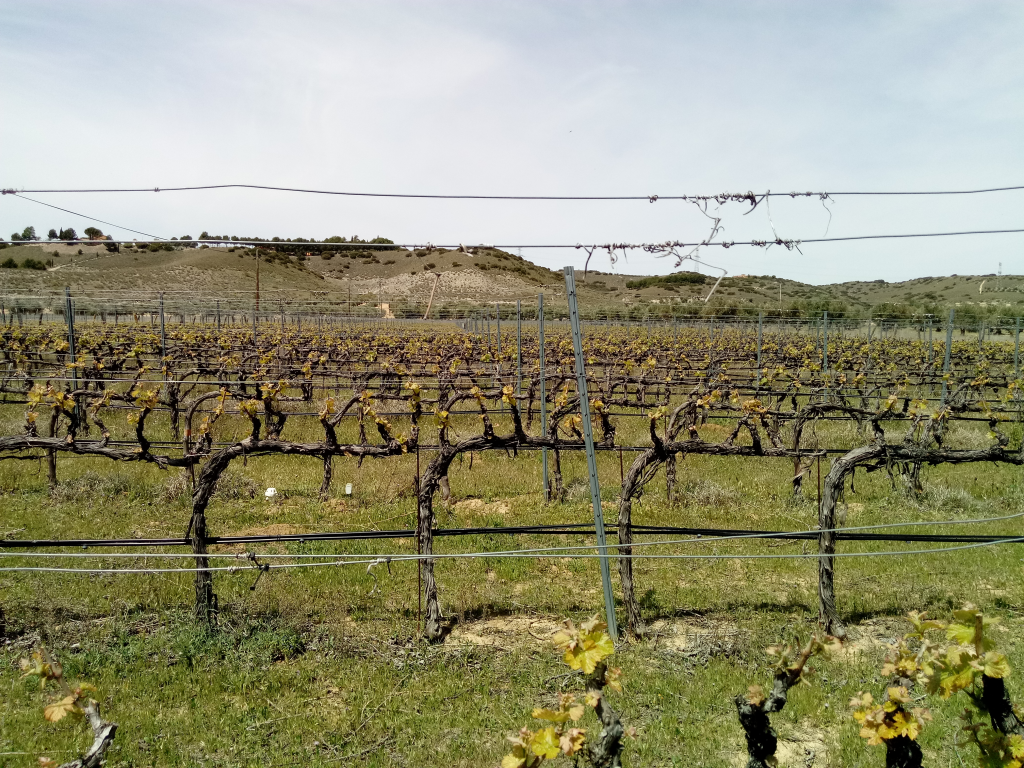
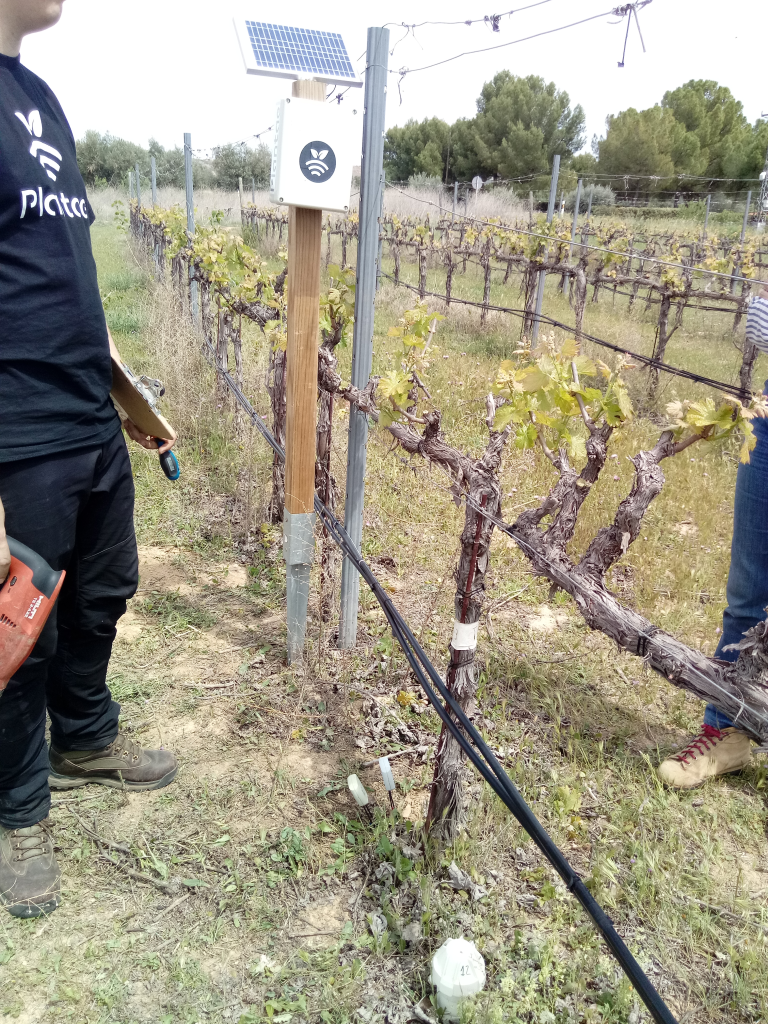
- It is recommended to install agricultural probes for humidity control and conductivity. Also the soil temperature that influences the phenological processes of the crops.
The benefits of conservation agriculture
- Soil conservation. Erosion is reduced and soil structure improves.
- Reduction of erosion. Degradation is avoided and it is more fertile in the long term.
- Improvement of soil structure.
- Conservation of biodiversity. They improve plant and animal species.
- Reduction of carbon footprint of agriculture.
- Water is saved, the soil has less evaporation. If we also control humidity with sensors, we can reduce water and energy consumption, while avoiding water stress for the plant.
- Fuel and fertilizers are reduced.
- Resilience to climate change: Agricultural systems based on soil conservation are more resistant to extreme climate events, such as droughts and floods, and can help mitigate the effects of climate change by capturing and storing carbon in soil.
- Long-term profitability: Although the transition to conservation agriculture may require initial investments, in the long term it can result in greater profitability due to reduced costs and increased soil productivity.
However, it also presents challenges, such as managing weeds and pests more sustainably and adapting to new agricultural practices.
Furthermore, conservation agriculture is an approach that seeks to integrate agricultural production with the conservation of natural resources, promoting the sustainability and health of agricultural ecosystems.
Sources:
 English
  Spanish