
Presentation by Emilio Rodríguez and Yonathan Matallana on precision agriculture, irrigation management and soil moisture monitoring using sensors from the company Plantae.
Challenges of precision agriculture in irrigation and soil moisture monitoring using sensors
Precision agriculture faces a major challenge:
- To produce more food using less water.
- Use less fertilizer.
- Taking better care of the soil.
At a technical workshop organized for farmers, specialists from the company Plantae explained how precision agriculture can help achieve this through the use of sensors and digital monitoring of the soil and climate.
The speakers highlighted that many irrigation decisions are still made "by intuition" or following traditional customs.
- However, each soil has a different capacity to store water and nutrients, so over-watering can be just as harmful as under-watering.
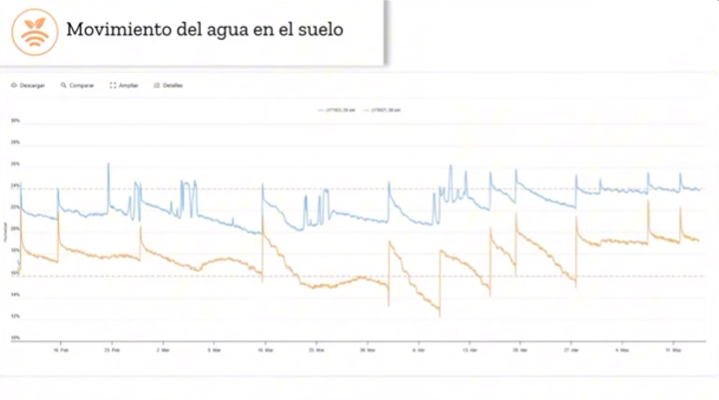
- Thanks to probes installed at different depths, it is possible to know in real time how soil moisture evolves, when the crop really needs water and how far the irrigation reaches.
One of the most important findings was that excess water reduces the oxygen available in the soil and causes root blockage, limiting nutrient absorption. Furthermore, water and fertilizers can be lost through leaching into deeper layers where the roots can no longer access them.
Real-life cases in avocado, onion, olive, apple and vegetable crops
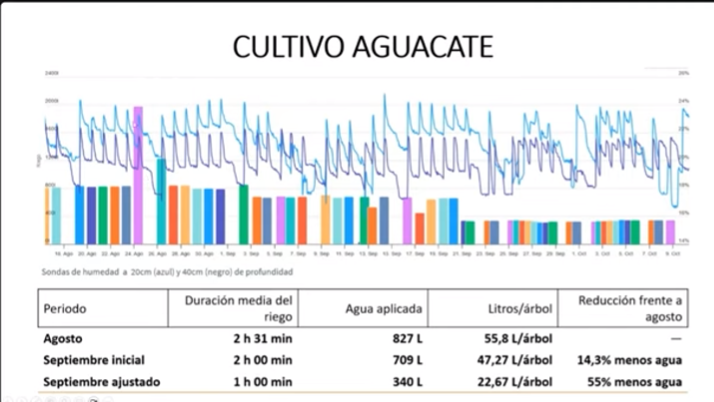
During the presentation, real cases were shown in crops such as avocado, onion, olive, apple and vegetables, where monitoring through sensors made it possible to significantly reduce water consumption without affecting production.
In some cases, savings of more than 50% were achieved, also improving the efficiency of fertilization and the root health of the plants.
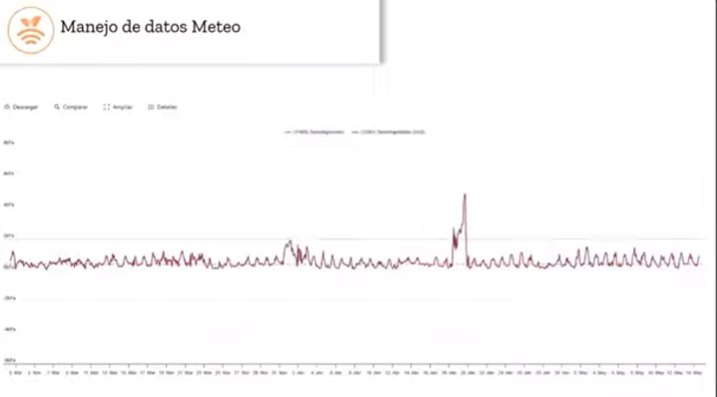
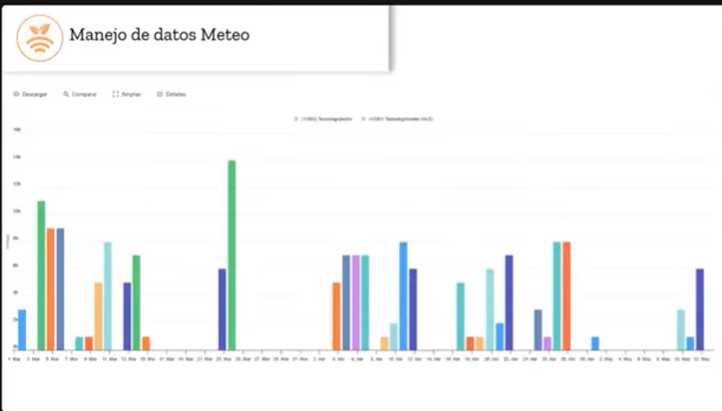
It was also explained how to combine soil data with climate information, such as rainfall, temperature, relative humidity, or leaf wetness, to anticipate stress situations or even prevent diseases.
The final message was clear: data alone is useless if it doesn't help in making better decisions. The key is transforming information into more efficient, profitable, and sustainable crop management.
Irrigation Challenges for Avocado and Other Crops
Table of Contents:
- Water availability and climate impacts on crops.
- Role of the company and measurement objectives.
- Soil capacity, critical moisture thresholds and interpretation.
- Case study: humidity, saturation events, and electrical conductivity.
- Rainfall and environmental metrics for context.
- Practical irrigation adjustments and measured water savings.
- Irrigation strategies, root distribution, and long-term effects.
They presented:
- Data from soil and environmental sensors.
- They explain concepts of field capacity.
- They show how sensor-based decisions reduced water use and nutrient loss, and highlighted impacts on crop health.
- They presented several real-world cases and showed water savings (up to ≈58%), reduced fertilizer losses, and recommended monitoring-guided adjustments to irrigation frequency and volume as next steps.
Sources
 English
  Spanish