
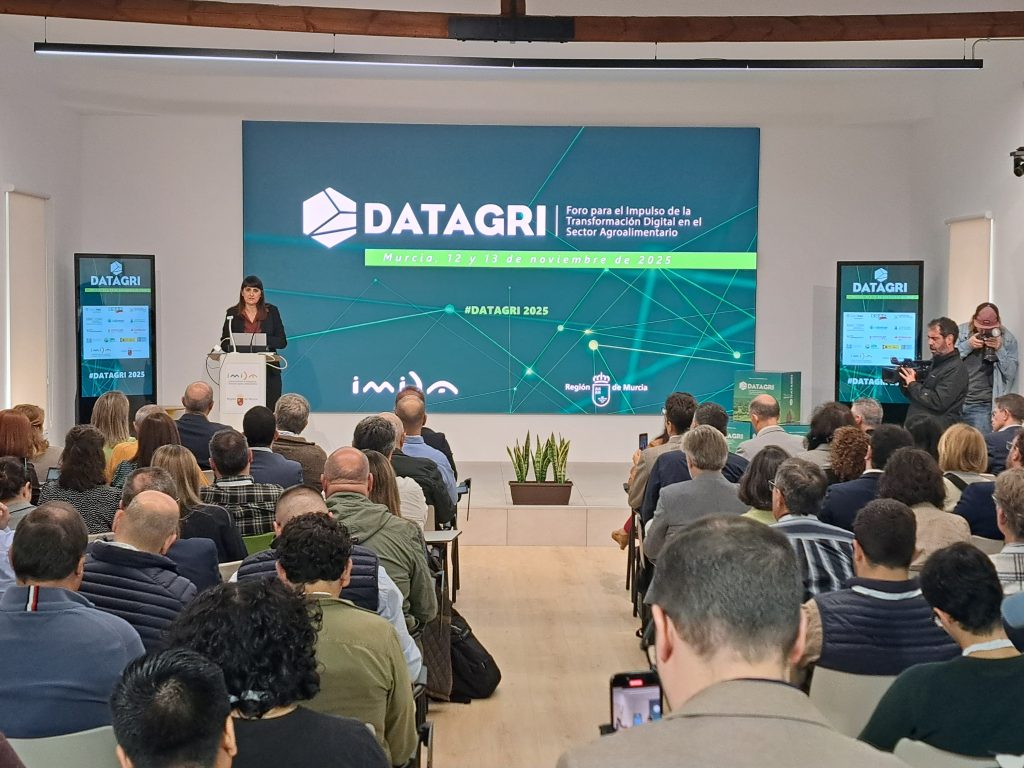
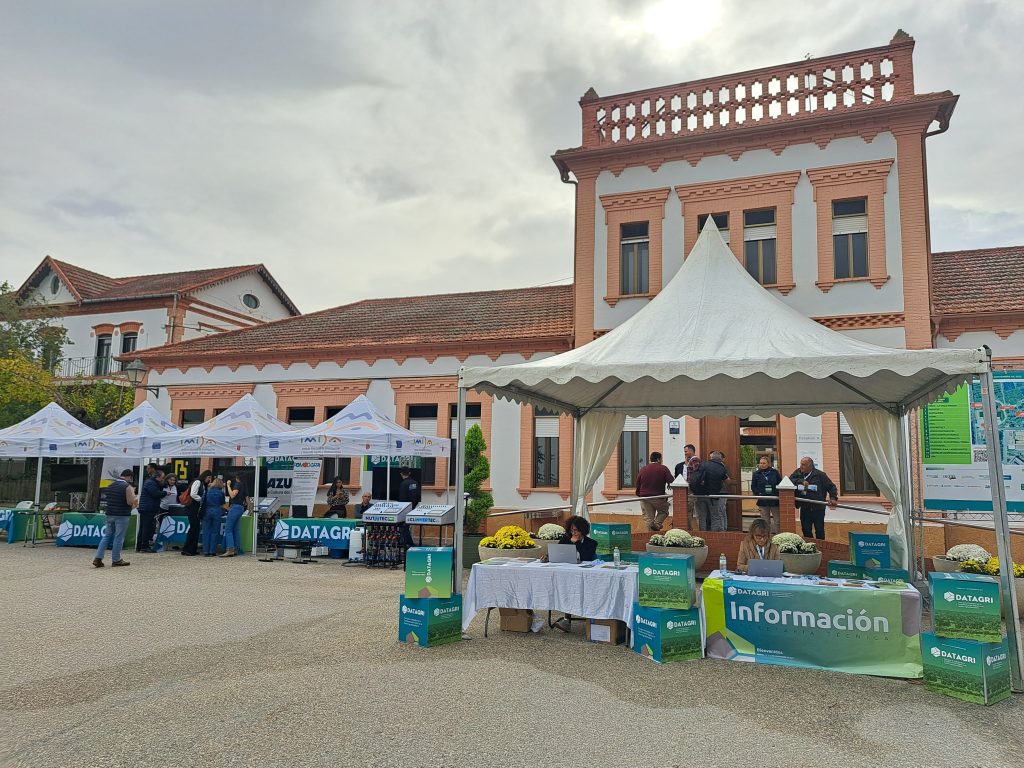
La VIII edición del Foro DATAGRI, dedicado a la transformación digital en el sector agroalimentario, se celebró los días 12 y 13 de noviembre de 2025, con presencia de Plantae. El foro se realiza en la Región de Murcia — el primer día en el Auditorio “Víctor Villegas” (Murcia), el segundo en el IMIDA (Instituto Murciano de Investigación y Desarrollo Agrario y Medioambiental), en La Alberca.
DATAGRI Forum 2025
The presence of more than 1,500 professionals is confirmed: technology companies, startups, institutions, agricultural organizations, cooperatives, universities, etc.
- The program includes keynote lectures, roundtables, field technology demonstrations and networking spaces.
- Some key topics were: smart water, sustainable nutrition with AI, automation, digital traceability.
- According to the organization, the field demonstrations featured very tangible technologies: for example, a mass-produced electric tractor, AI-powered glasses for pruning training, among other things.
- Among the organizers and collaborators were: COAG, Hispatec Agrointeligencia, ETSIAM (University of Cordoba), Agro-food Cooperatives, Cajamar, IMIDA, ASAJA, UPA, etc.
Plantae and its relationship with DATAGRI
- Agrotech “Plantae” develops wireless sensors for precision agriculture (humidity, temperature, conductivity) and agricultural data analytics.
- Its wireless sensor technology allows for water savings and optimized production, which aligns perfectly with DATAGRI 2025's philosophy of digitalization and sustainability. These sensors send data to a platform ("Panel/Manager") accessible via app or web, enabling farmers to make more efficient irrigation decisions.
- Plantae also has an agronomic team (“Plantae Agro”) that advises on data interpretation and sensor installation.
- Plantae already operates in several countries: they have installed agricultural probes in countries on 4 continents.
- The Murcia region, represented by its partner Campoes, offers advanced agricultural monitoring solutions, aimed at improving irrigation efficiency, soil management and crop sustainability through IoT technology and smart sensors.
- The most important highlight of the fair was the mention of the Data Space Kit grant, a support program from the Ministry for Digital Transformation (applications can be submitted through Acelera Pyme / Red.es) to facilitate the integration of companies and public administrations into sector-specific “data spaces.” The second sector that has applied the most so far is the agricultural sector, and its application period has been extended until March 31, 2026.
- The aim of the grants is to cover the costs of technically integrating into these spaces: data preparation, tools, personnel, consulting, and interoperability. They finance your entry into and participation in the data economy.
Sources
 English
  Spanish