
A practical guide on where rambutan is grown in Colombia, what its irrigation needs are, and how to optimize irrigation with probes (soil moisture sensors) to improve its quality and save water and energy.
Rambutan zones and adaptation in Colombia
Look for areas with a warm-humid climate, low to medium altitude, deep, well-drained soils with good organic matter.
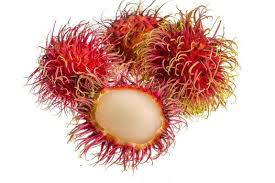
Rambutan in Colombia is an exotic crop with recent commercial growth, planted mainly in:
- Foothills of Meta.
- The Magdalena Medio region.
- There are also experiences and plantations on small farms in other warm areas (Valle del Cauca, some farms in the Coffee Region and scattered reports).
Climate and water requirements (the essentials)
- Rambutan requires a warm climate and high relative humidity; it is sensitive to drought and needs consistently moist (but not waterlogged) soil for good fruit set and quality. Soil moisture sensors play a crucial role in this, indicating the crop's needs in real time and allowing for informed decisions about the amount of water to apply.
- Long dry periods reduce flowering and fruit set; many blooms occur after short periods of water stress, but overall production suffers if the drought is prolonged.
- Critical water periods: Flowering and fruit set (fruit formation stage) and fruit filling/ripening. Avoiding stress during these phases increases yield and quality. Humidity sensors prevent this water stress in the crop, resulting in higher quality fruit.
Which irrigation system should I choose?
- Drip irrigation combined with fertigation or localized micro-sprinkler irrigation are the most recommended methods in tropical fruit cultivation due to their efficiency and ability to control moisture in the root zone. They prevent waterlogging and facilitate the application of soluble fertilizers. General management recommendations for rambutan suggest installing irrigation when the dry season exceeds 1–2 months. Controlled irrigation is preferable.
How to optimize irrigation with probes (Plantae moisture sensors)
| Texture | Irrigation start threshold | Irrigation cutoff threshold |
|---|---|---|
| Sandy | 12–18 % | 20–24 % |
| Franco / sandy franc | 18–25 % | 26–30 % |
| Clay loam / clay | 25–35 % | 32–38 % |
Golden rule with Plantae: Set “low alert” to the start threshold and “high alert” to the cut-off threshold.
This way, the Plantae chart/traffic light marks irrigation windows for you without looking at the calendar.
Rambutan phase-specific irrigation strategy
| Phase | Humidity policy |
|---|---|
| Flowering + fruit set | Maintain close to optimum, do not allow to drop to the “low” except for short micro-deficits if using RS (regulated stress) |
| Fruit filling | No stress — keep in high-mid range |
| Between harvests | You can allow small reductions for savings — but not by prolonging the drought |
Practical calibration with Plantae
- Install probes and irrigate to "field capacity" (first full irrigation).
- Mark that plateau on the curve as your operational top.
- Stop consuming without irrigation until you see a stable drop + first mild physiological symptom (not severe wilting) ⇒ mark that point as real lower threshold.
- Adjust the thresholds in the initial table → to your actual data.
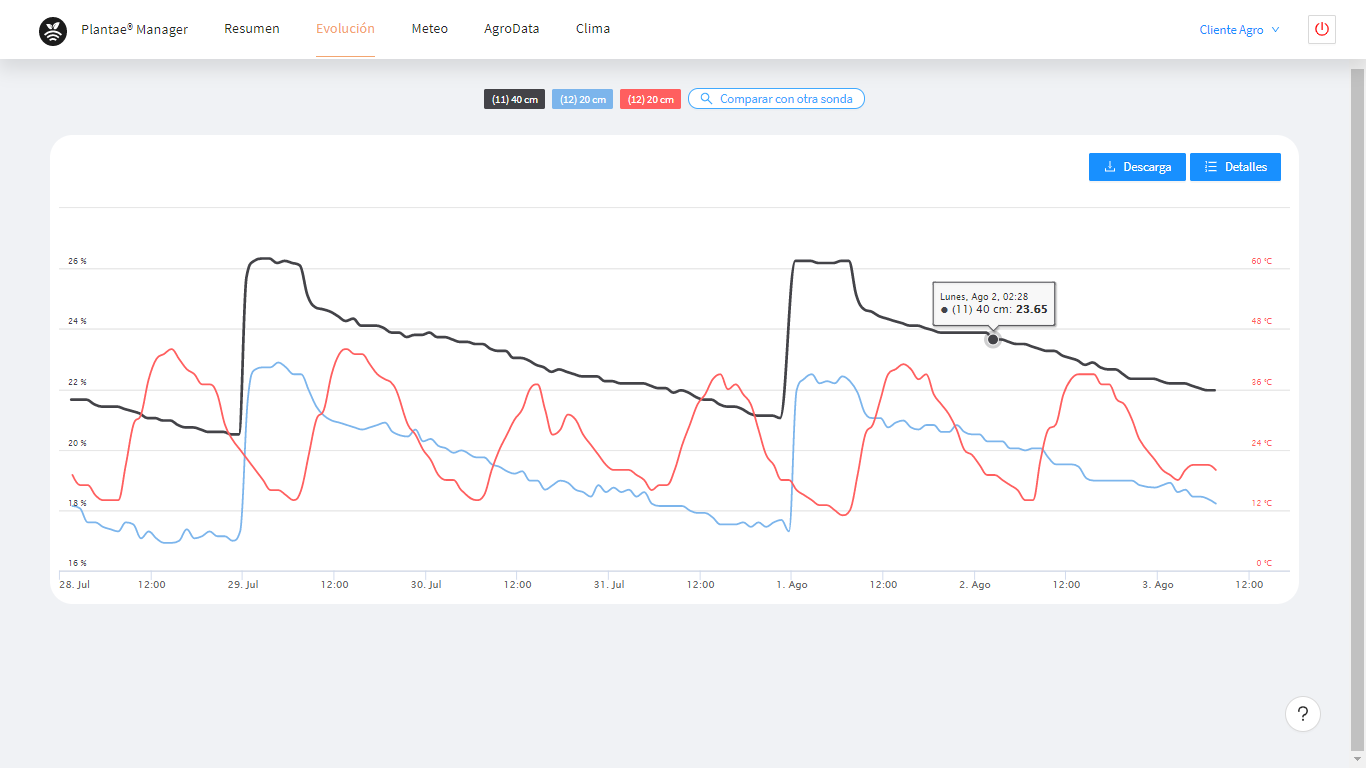
Irrigation strategy with probes
- Controlled deficit irrigation: sets a lower threshold based on soil texture; when 2/3 of the probes in the plot (or most in the root zone) are below this threshold, irrigation is activated until VWC is restored to a higher threshold (e.g., +5–8% VWC above the initial threshold). This avoids short, frequent irrigations and improves efficiency.
- Don't water according to a schedule if you have probes, water on demand.
- During flowering/fruit set reduces tolerance to deficit (keep VWC closer to the optimum, not the limit).
Sources
 English
  Spanish