
The efficiency of drip irrigation is not a static value: it depends on systematic and professional maintenance. Neglecting these tasks turns the system into a "silent killer" of agricultural productivity. Investing in maintenance not only prevents economic losses but also ensures that this technology fulfills its true potential: producing more with less, sustainably.
Drip irrigation
Drip irrigation is one of the most widely adopted technologies in modern agriculture due to its high water use efficiency, its ability to apply fertilizers locally (fertigation), and its contribution to sustainable resource management. However, its optimal performance is not guaranteed solely by good design or proper installation. Operation and preventive maintenance are critical elements for maintaining system efficiency over time, both in surface drip irrigation and in buried drip irrigation, which is more prone to clogging.
As detailed in the article published by Interempresas “The silent killer of drip irrigation”, the biggest enemy of drip irrigation is not visible to the naked eye:
- Internal obstruction of drippers due to the accumulation of solid particles.
- Organic matter.
- Biofilm.
- Chemical precipitations.
- Growth of algae and bacteria inside irrigation lines.
Main causes of obstruction in drip systems:
- Physical clogging: accumulation of mineral sediments, sand or clay present in the water that are deposited in the emitters, causing obstruction and therefore a decrease in dripping.
- Biological silting: development of biofilms, filamentous bacteria and algae, especially in untreated surface water.
- Chemical silting: precipitation of carbonates, sulfates or phosphates, due to chemical imbalances in the water or reactions with fertilizers.
Differences in clogging between buried and surface dripping
| Aspect | Surface Drip | Buried Drip |
|---|---|---|
| Location of the issuer | On the ground surface. | Below ground (10–40 cm deep). |
| Maintenance access | Easy access and cleaning. | Difficult access; requires digging. |
| Most common type of clogging | Physicist and chemist. | Biological, physical and intrusive roots. |
| Frequency of clogging | Minor, if the system is well maintained. | Greater in the long term, due to subsoil conditions. |
| Risk from roots | Low. | High: roots can penetrate the emitters. |
| Pressure required for cleaning (flushing) | Minor. | Higher: requires more pressure to bleed. |
| Problem detection | Immediate visual. | Difficult: only visible in the crop or flow, unless sensors are installed for monitoring. |
| Microorganisms | Less proliferation (more aeration). | Increased risk of biofilm and anaerobic bacteria. |
A partial blockage can reduce the flow rate of some drippers, causing uneven distribution and water stress in certain areas of the crop. This directly affects yield, product quality, and the efficient use of water and nutrients. When the blockage is complete, irrigation areas are lost entirely, with even more serious consequences.
Achieving drip irrigation efficiency
Many growers make the mistake of thinking that once installed, drip irrigation systems require little attention. This is a myth. Like all hydraulic infrastructure, constant use exposes it to wear and tear, residue buildup, and fluctuations in water quality. Without a structured maintenance plan, problems accumulate until they become costly or irreversible.
Good practices to prevent obstructions and maintain the efficiency of drip irrigation:
- Proper Filtration: It is essential to adapt the filtration system (mesh, rings, sand, cyclone, etc.) to the type of water and the expected quality. For water with organic matter, install a disc filter. If the water contains solids, a sand filter is advisable. Regular inspection and cleaning of filters is recommended.
- Line Flushing: Lateral lines and main lines should be flushed periodically to remove sediment and prevent buildup. Check flow rates and pressure at drip lines to detect blockages.
- Chemical treatment: In some cases, treatments with nitric, phosphoric acid or sodium hypochlorite are required to dissolve precipitates and control biofilm.
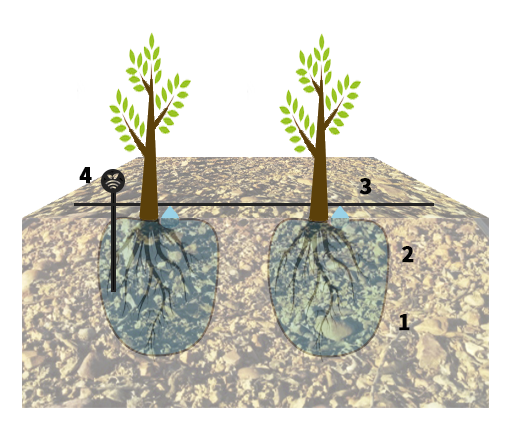
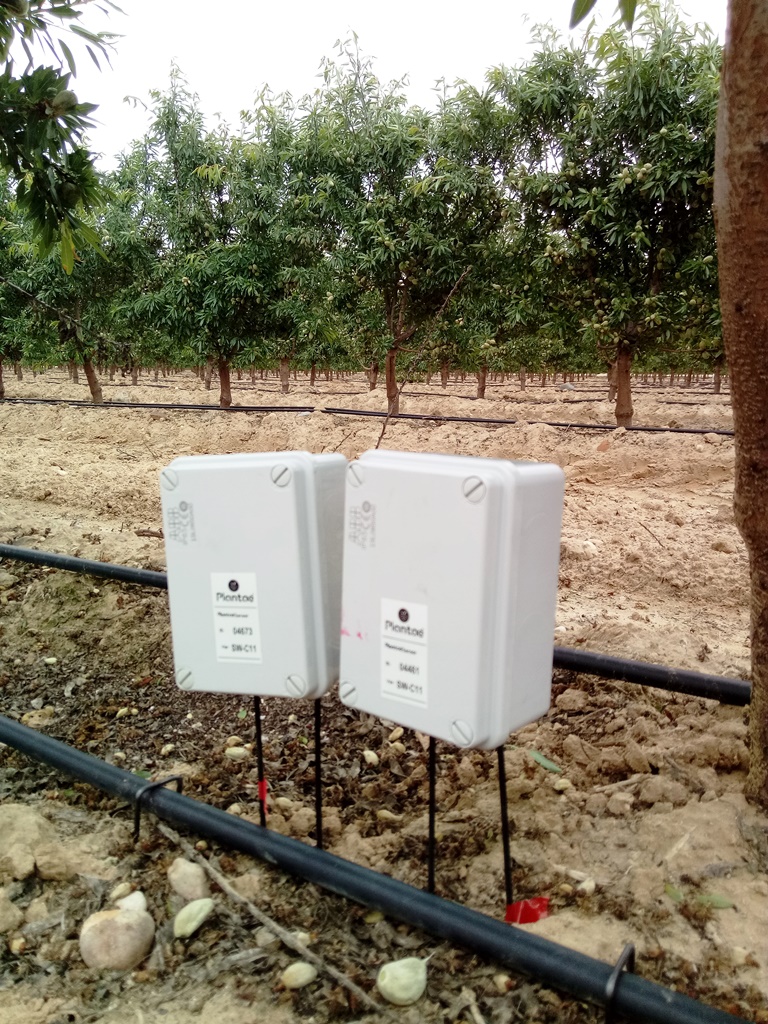
- Flow and pressure monitoring: Installing flow meters and recording flow rates at different points in the system allows us to detect incipient blockages. Monitoring water stress with probes can help detect anomalies in the system. The soil temperature sensor helps assess the state of root activity.
- Irrigation water analysis: It is essential to know the physical and chemical parameters of the water (pH, hardness, EC, alkalinity, etc.) to prevent unwanted precipitation. Control the pH (ideally: 6.5–7.5) to prevent salt precipitation. To control salts, install conductivity sensors.
- Staff Training: The team operating the system must receive ongoing training on maintenance, diagnostics, and operation.
- Recording and traceability: Keeping a record of interventions, cleanings, analyses, and repairs facilitates monitoring and improves decision-making.
Sources
 English
  Spanish