
Soil temperature monitoring with sensors indicates the release rate of encapsulated fertilizers. We explain how in the following article.
What are encapsulated fertilizers?

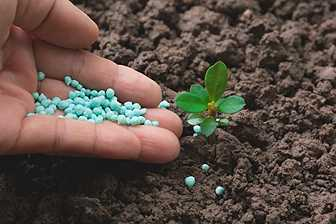
Encapsulated fertilizers are an innovative way to apply nutrients in agriculture. They allow controlled release, improving absorption efficiency and reducing environmental impact.
These fertilizers are coated with special materials (polymers, resins, sulfur, or other biodegradable compounds) that regulate the release of nutrients based on factors such as soil moisture, temperature, and microbial activity.
Plants require different amounts of nutrients depending on their phenological state, so it is advisable to measure soil moisture and root temperature.
Its application is very important in crops such as:
- Cereals (wheat, corn, rice): Improves nitrogen absorption.
- Fruits and vegetables: Balanced nutrition improves performance.
- Legumes and organic crops: An ecological alternative for fertile soils.
Importance of using a soil temperature sensor
Soil temperature control is key to optimizing the efficiency of encapsulated fertilizers, as nutrient release is often temperature-dependent.
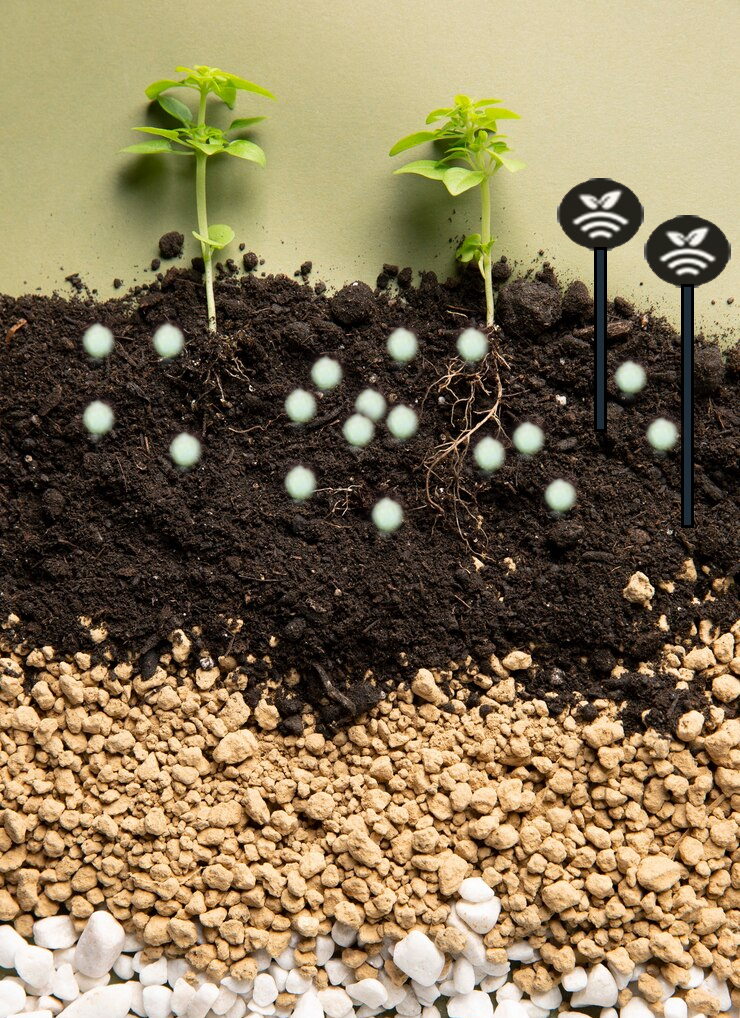
- The amount of nutrient uptake by crops increases with soil temperature.
- As temperatures rise, root activity increases and encapsulated fertilizers are activated. Higher temperatures release nutrient levels at a faster rate.
- At low temperatures, release is slower and can delay crop growth.
- Most encapsulated fertilizers work between 15°C and 30°C soil temperature.
- By measuring soil moisture, we prevent leaching and volatilization losses, providing the plant with the nutritional input it needs on a consistent and long-term basis. This also reduces soil and runoff contamination.
- It also reduces labor costs and improves crop planning.
Measurements help farmers make decisions about how to use mulches. These can be black or white, depending on the objective. Black mulches absorb heat, while white mulches reduce temperature by reflecting the heat. Application of cold or warm water is also suggested, depending on measurements from the humidity and temperature sensors.
Sources
 English
  Spanish