
El riego es un tema que llevamos tratando en varios artículos y hoy iniciamos los “Tipos de riego superficial–(III)” con riego por tendido o inundación y escurrimiento libre o en tablares cerrados.
En próximos artículos trataremos el “furrow irrigation” y los riegos tecnificados o presurizados cómo “sprinkler irrigation” y “riego por goteo“. Ya hemos valorado en el primer artículo lo importante que es la decisión de elegir un buen método de riego.
Surface irrigation
This type of irrigation has the particularity of applying the water on the surface of the soil. The water flows through the force of gravity and seeps into the ground.
Water needs a channeling towards the cultivation and distribution through the land, but it is very economical because no installation is required.
The peculiarity is that they depend on the type of crop and the orography of the land.
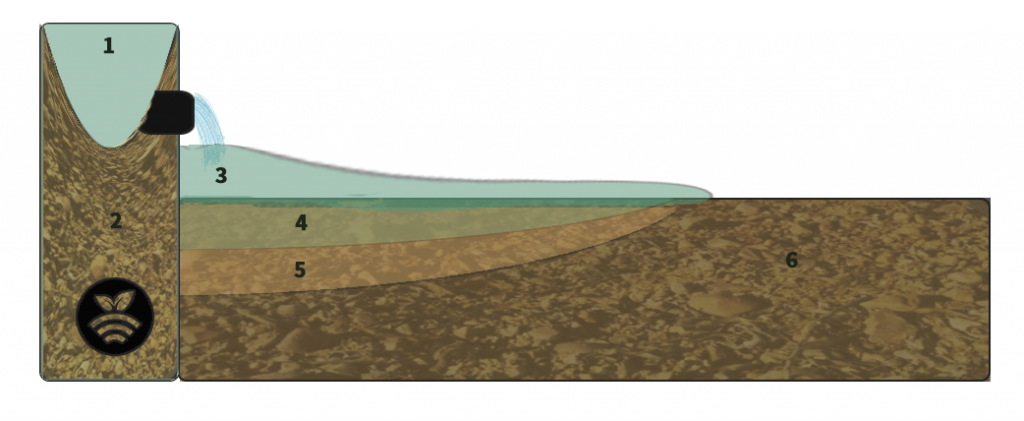
IRRIGATION BY LAYING OR FLOODING
Line irrigation is the oldest way of applying water to crops. No major work is done to level or level the ground, losing a large amount of water. Generally, no more than 20 to 30 liters of water are used for every 100 liters that are applied.
The work and investment that must be done to use this method comes down to tracing the channels.
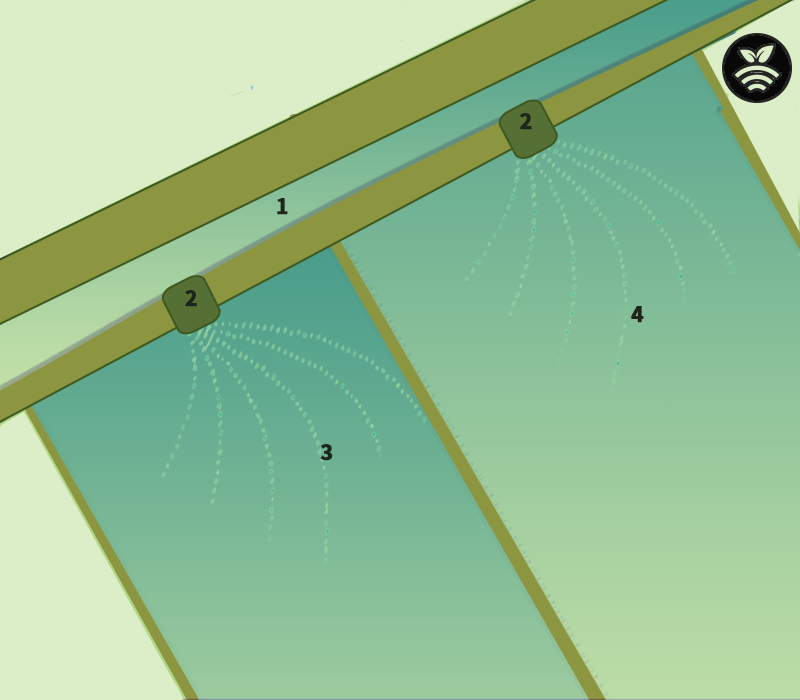
The distribution of the channels depends fundamentally on the irrigation by laying of:
- The slopes of the land.
- Distribution of channels that cover the highest point of the terrain.
- You can make one or more water inlets.
- It is especially advisable for meadows and cereal fields.
- The farm should be distributed with boards that allow watering by sections.
- It is advisable that the land does not have slopes.
Almost all soils and crops can be watered, but avoid watering those planted in rows or fruit trees.
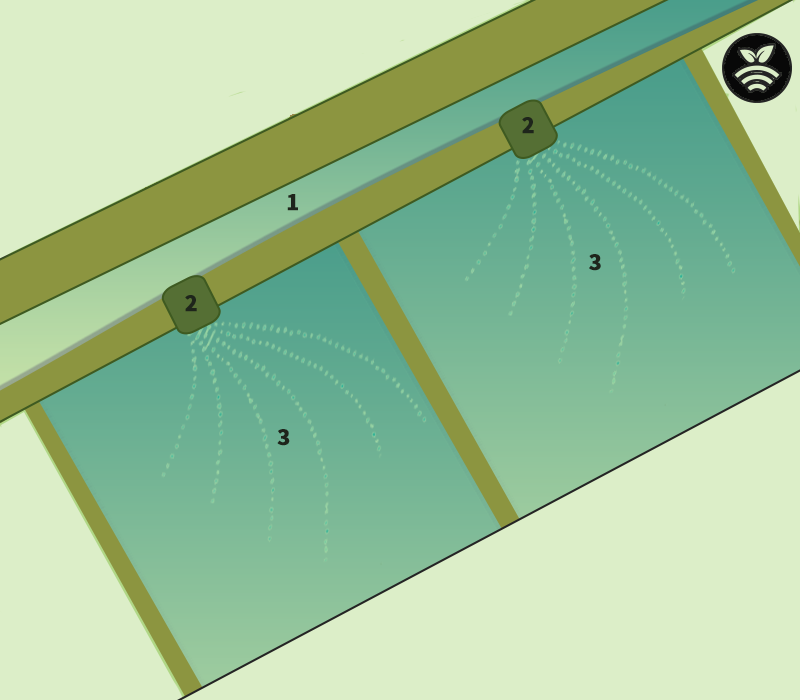
Basic rules for applying a laying or flood irrigation
Due to the problems that have been analyzed, it is not a recommended method, however, efficiency can be improved by considering some management aspects such as:
- To raise the water level in the canal use an irrigation blanket or build gates.
- To remove the water from the canal, use siphons, distribution boxes or boards, do not break the edges or parapets of the channels.
- Make the gutters with a slight slope, maximum 8 cm in 10 meters, following the contour lines of the terrain (contour ditches) allowing the water to run smoothly between one ditch and another.
- Water long enough to wet down to the root zone of the crop.
- Use an amount of water that you can easily control.
- Don't wait for the plants to look wilted to water again.
- Water small cloths so you can better handle the water.
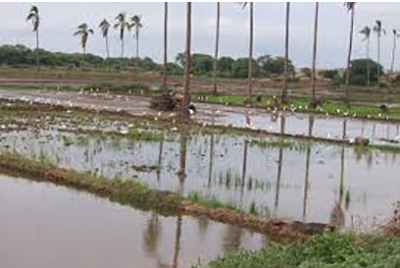
Irrigation by free runoff
It is similar to irrigation by laying or flooding, but for land with a little slope, so that the excess water is released at the end of the watered cloth.
It is therefore positive to collect the excess water with collectors and store it for other possible irrigations.
If the excess water cannot be collected, we must water just enough so that the guide advances to the end of the board.
Irrigation by runoff in closed planks
In this case the end of the board is closed, the irrigation therefore must be very controlled because by not draining at the end of the board we are at risk of flooding at the end of the field.
Plantae sensors help you monitor the humidity and conductivity of
your meadows or horticultural crops.
Source:
 English
  Spanish